

Music and politics are in essence about communication. Without over-stretching the analogy I do feel a sense of rhythm is important in getting your message across.
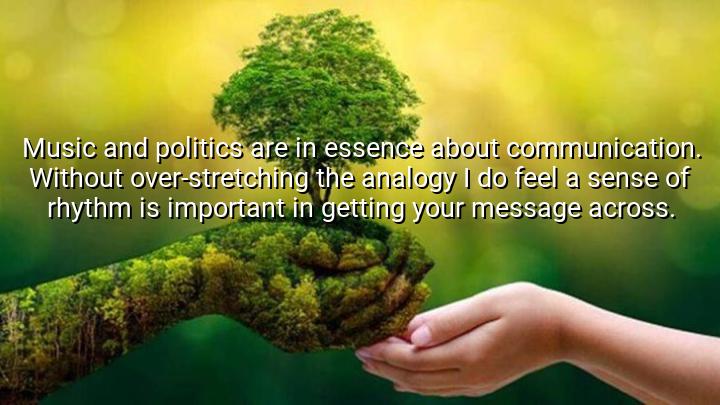




The quote " Music and politics are in essence about communication. Without over-stretching the analogy, I do feel a sense of rhythm is important in getting your message across" by Charles Kennedy reflects on the role of communication in both music and politics. Kennedy, a British politician, draws a parallel between these two fields, suggesting that both rely on effectively conveying ideas, emotions, and values to an audience. Whether through a musical performance or a political speech, the message is central to the interaction between the speaker or performer and their listeners.
By using the term rhythm, Kennedy hints at the importance of pacing and timing in communication, not just in music, but in political discourse as well. A well-delivered message requires careful consideration of how it is presented—whether it’s the tempo of a song or the cadence of a speech. Just as a song's rhythm can drive its emotional impact, the pacing of a political speech can determine how effectively an audience absorbs and reacts to the message.
The quote also emphasizes how music and politics are inherently linked by their need to engage people. Music, like politics, has the power to influence, inspire, and stir emotions. Both can move people to action, create solidarity, or shape opinions. Kennedy's analogy suggests that understanding the underlying rhythm—or flow—of communication is crucial for success in either field.
Ultimately, Charles Kennedy's quote reflects his belief that, while the content of a message is vital, the way it is communicated is just as important. Whether you're crafting a political speech or a piece of music, the rhythm, timing, and delivery are key to ensuring your message resonates with the audience.

AAdministratorAdministrator
Welcome, honored guests. Please leave a comment, we will respond soon