

Most people have never learned that one of the main aims in life is to enjoy it.
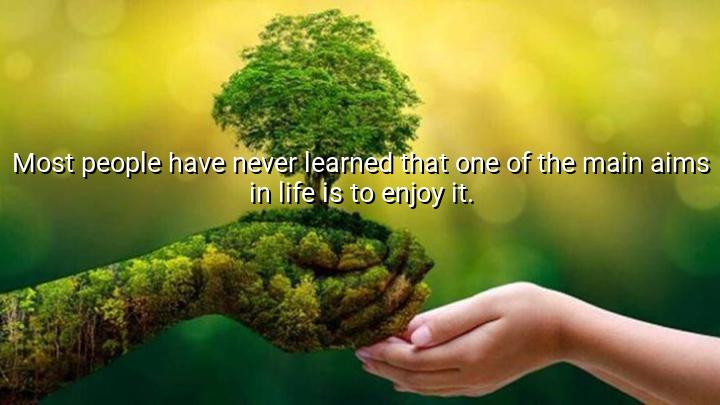




In this quote, Samuel Butler reflects on the idea that many people fail to recognize that a central aim in life is to enjoy it. He suggests that, instead of focusing solely on achievement, success, or fulfilling societal expectations, individuals should prioritize finding joy in life. According to Butler, enjoyment is often overlooked or pushed aside in the rush of daily responsibilities, leading people to miss the deeper, more fulfilling aspects of existence. This is a call to be more mindful of the present moment and embrace the pleasures life offers.
Butler, a 19th-century British writer, was known for his satirical and philosophical works that often challenged societal norms. His perspective on life reflects his broader themes of individualism and critique of conventional values. As an author of works such as Erewhon, Butler explored ideas of human nature and the tension between personal desires and societal expectations. His quote serves as a reminder that happiness and satisfaction are not automatic outcomes of life but are things that require conscious pursuit and reflection.
The origin of the quote is rooted in Butler's broader philosophical perspective on human existence. In his works, he frequently examined how people get caught up in the pressures of work, duty, and social approval, often at the expense of their own well-being and enjoyment. Butler's words here point to a modern dilemma: the tendency to get swept away by external demands rather than focusing on the simple pleasures that bring joy. His comment challenges readers to reevaluate their priorities and recognize the importance of living a fulfilled and joyous life.
Ultimately, Butler’s quote serves as a reminder that life is not just about tasks and obligations, but about embracing the experiences that bring us pleasure and contentment. By recognizing that enjoyment is one of life’s main goals, individuals can seek out opportunities for happiness and fulfillment, rather than simply moving through life on autopilot. It urges us to appreciate the small, everyday moments that make life rich, encouraging a more balanced and mindful approach to living.

AAdministratorAdministrator
Welcome, honored guests. Please leave a comment, we will respond soon