

Most of us believe in trying to make other people happy only if they can be happy in ways which we approve.
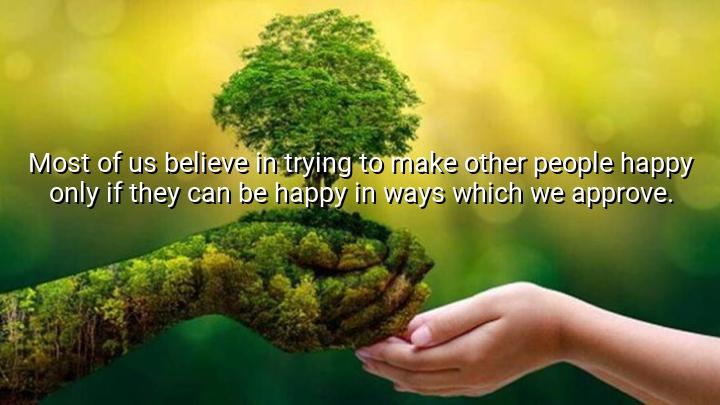




The quote "Most of us believe in trying to make other people happy only if they can be happy in ways which we approve" by Robert Staughton Lynd speaks to the often conditional nature of our desire to make others happy. Lynd, an American sociologist, suggests that while people may claim to want the best for others, their actions are often based on the idea that happiness should conform to their own values and expectations. In other words, we tend to believe that others should find joy in the ways that we deem appropriate or acceptable, rather than allowing them to pursue their own version of happiness.
The quote highlights the limitations in human relationships when it comes to offering unconditional support. Many times, our attempts to make others happy are shaped by personal biases or a desire for others to share our perspective. This leads to a form of selfishness or control, where we subtly impose our standards of happiness on others, instead of respecting their individual desires and needs.
Lynd’s observation suggests that true empathy and understanding are needed to foster genuine connections with others. It calls for a shift from judging what makes others happy to a more accepting and open mindset that allows people to pursue their happiness in their own unique ways. This realization encourages a deeper level of respect for individual autonomy and the diverse paths people take to find fulfillment.
Ultimately, the quote challenges us to reflect on the way we offer support to others. It asks whether we are truly trying to make others happy, or if we are merely trying to fit their happiness into a mold that aligns with our own preferences. It’s a call to embrace diversity in happiness and understand that fulfillment can look different for each person, even if it doesn’t align with our own ideals.

AAdministratorAdministrator
Welcome, honored guests. Please leave a comment, we will respond soon