

Mental illness can happen to anybody. You can be a dustman, a politician, a Tesco worker... anyone. It could be your dad, your brother or your aunt.
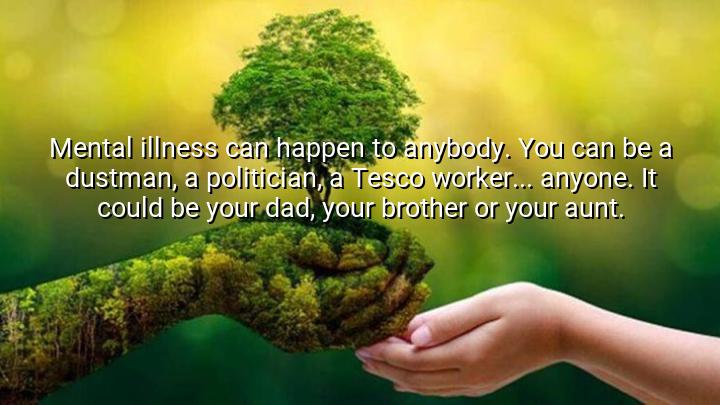




In this quote, Frank Bruno highlights the universal nature of mental illness, stressing that it can affect anyone, regardless of their background, occupation, or social status. By listing various types of people, from a dustman to a politician or a Tesco worker, Bruno emphasizes that mental health issues are not confined to any specific group, but can impact people from all walks of life. His point is that mental illness does not discriminate, and anyone can face it, regardless of their job or position in society.
Bruno also makes it personal by stating, "It could be your dad, your brother, or your aunt," which brings the message closer to home. This part of the quote underscores the idea that mental illness can affect families, not just strangers or people we don’t know well. By naming family members, he evokes a sense of empathy and awareness, encouraging people to recognize that mental health challenges are part of our collective human experience and can touch anyone in our lives.
The quote is important in breaking the stigma surrounding mental illness, particularly by emphasizing that it can happen to anyone, regardless of their outward appearance or success. By referencing a range of individuals, from ordinary workers to public figures, Bruno promotes the understanding that mental health struggles are not signs of weakness or failure, but are part of the broader human condition.
Ultimately, Frank Bruno’s message is a call for greater awareness and compassion regarding mental health. He aims to eliminate the stigma that can prevent people from seeking help, urging society to recognize that mental illness is not something to be ashamed of, but something that requires understanding, support, and treatment.

AAdministratorAdministrator
Welcome, honored guests. Please leave a comment, we will respond soon