

May your trails be crooked, winding, lonesome, dangerous, leading to the most amazing view. May your mountains rise into and above the clouds.
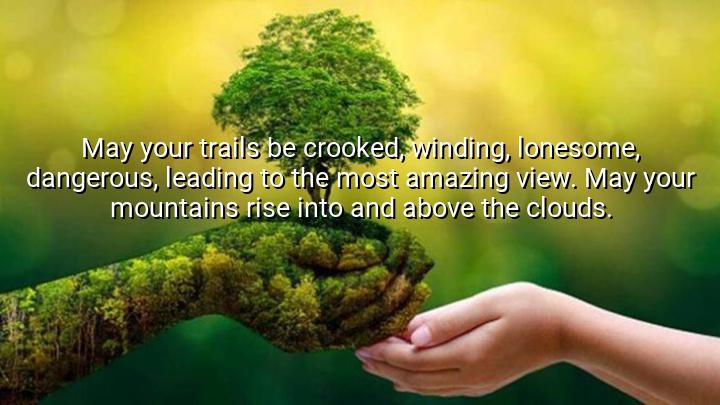




The quote by Edward Abbey — "May your trails be crooked, winding, lonesome, dangerous, leading to the most amazing view. May your mountains rise into and above the clouds." — speaks to the idea that the journey toward something meaningful or worthwhile is often filled with challenges and obstacles, but it is these struggles that ultimately lead to great rewards. Abbey uses the metaphor of trails and mountains to express how life's paths may not always be easy or straightforward, but they can lead to profound and beautiful experiences when we embrace them.
Abbey's use of crooked, winding, and dangerous trails reflects the notion that life is unpredictable and sometimes difficult. However, he implies that these difficulties are what make the ultimate reward — the amazing view — all the more satisfying. The mountains rising above the clouds symbolize the heights of achievement and personal growth that can be reached through perseverance and the willingness to face adversity. The quote is a celebration of resilience and the transformative power of challenging experiences.
The origin of this quote can be traced to Abbey's writing and philosophy, which often centered around the beauty of nature and the complexity of the human experience. As an environmental writer and essayist, Abbey had a deep connection to the wilderness and frequently explored the themes of exploration, freedom, and the ruggedness of the natural world. His works, such as Desert Solitaire, reflect his reverence for the untamed landscapes and the life-changing experiences they can offer.
Ultimately, Abbey's words encourage us to embrace the journey with all its difficulties and uncertainties, knowing that the struggles are often what make the destination worth it. The view — a metaphor for the rewards of life — becomes all the more meaningful when we endure and overcome the challenges along the way. His quote serves as a reminder that great achievements and personal growth often arise from the most difficult and unpredictable paths.

GDGold D.dragon
This quote really stuck with me. It challenges the typical desire for easy, linear paths. Abbey seems to imply that true beauty and fulfillment lie beyond risk and uncertainty. But does this romanticize struggle? Not everyone wants or needs a dangerous road to feel accomplished. Is there a way to honor both peaceful and perilous paths in how we define a meaningful life?
N9Le Tran Thao Nguyen 9/4
The imagery here is breathtaking. It makes me think about the kind of life we choose to live. Are we chasing comfort, or are we seeking something extraordinary—even if it means hardship along the way? I’d love to hear how others interpret the notion of a 'trail' in their personal or professional journeys. What’s your most crooked trail so far?
KBDuong Nguyen Khanh Bang
I find this quote both haunting and inspiring. It seems to encourage embracing the chaos and unpredictability of life, rather than avoiding it. But part of me wonders, is this advice practical or poetic? How do we reconcile this idea with the need for stability and safety, especially for people who don’t have the luxury to take risks?
Bbuithingocchau
There’s something deeply romantic and philosophical in this wish. It’s not just about physical landscapes, but about the metaphorical paths we take in life. I wonder, though—do we need danger and solitude to reach meaningful heights? Is suffering always necessary for personal growth, or can peaceful, straight trails also lead to breathtaking views?
DHDhsh H
This quote feels like a poetic blessing and a challenge at the same time. It seems to celebrate the beauty of difficulty and the reward of perseverance. Do you think this kind of mindset is essential in a world that often seeks convenience and safety? I’m curious how people interpret 'crooked, lonesome, dangerous' trails—does it inspire or intimidate you?