

Many low-income children face chronic stress from nutritional deprivation or persistent violence at home or in the community. By addressing their medical, emotional and developmental needs through a comprehensive clinical care model, we can lower their risk of developing long-term physical and mental health issues.
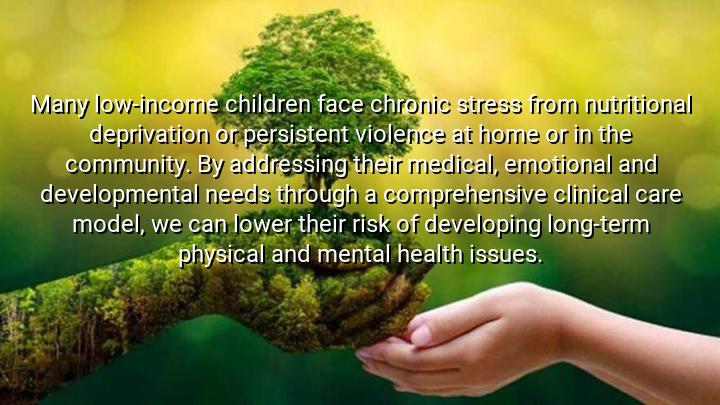




Irwin Redlener’s quote addresses the impact of chronic stress on low-income children, emphasizing how factors such as nutritional deprivation and persistent violence contribute to long-term physical and mental health issues. Redlener highlights that these children face unique challenges that hinder their development and overall well-being. He advocates for a comprehensive clinical care model that addresses not only the medical needs of these children but also their emotional and developmental needs, aiming to mitigate the long-term consequences of such adversity.
The quote reflects Redlener’s belief that children in disadvantaged circumstances often lack access to the holistic care that could help them cope with and overcome these stressors. By addressing physical, emotional, and developmental needs in a unified way, Redlener suggests that it is possible to reduce the risk of serious health problems that might arise from these early life challenges. This approach focuses on the integration of different forms of care—medical, psychological, and developmental—so that children are given the best chance for resilience and positive growth.
Redlener, a pediatrician and expert in child health, has spent much of his career advocating for vulnerable children, particularly those in low-income or disadvantaged environments. His work has often focused on the importance of early intervention and providing children with the resources they need to overcome adversity. This quote is rooted in his larger vision of a health system that is more inclusive and responsive to the unique challenges faced by underserved communities.
Ultimately, Redlener’s quote underscores the need for a more integrated, compassionate, and holistic approach to healthcare for children, especially those in low-income households. By recognizing the profound effects of chronic stress and trauma on children’s health, his message advocates for proactive, comprehensive care that aims to break the cycle of poverty and poor health. The goal is to equip these children with the resources they need to thrive, both in the short-term and throughout their lives.

AAdministratorAdministrator
Welcome, honored guests. Please leave a comment, we will respond soon