

Love is a springtime plant that perfumes everything with its hope, even the ruins to which it clings.
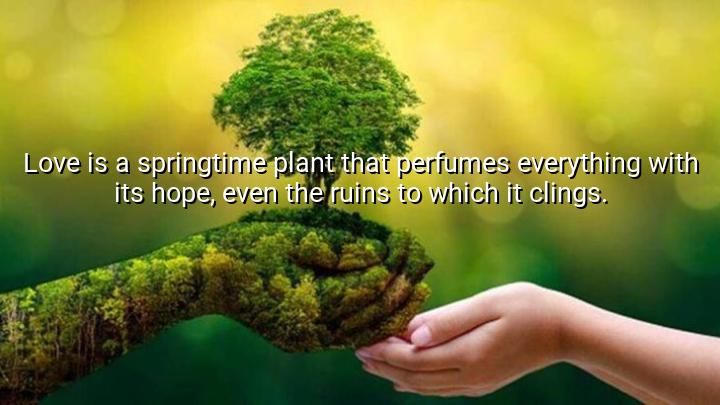




The quote by Gustave Flaubert, "Love is a springtime plant that perfumes everything with its hope, even the ruins to which it clings," uses the metaphor of springtime to convey the rejuvenating and uplifting power of love. Flaubert likens love to a plant that grows and blossoms, bringing new life and fragrance even to the most desolate places. This imagery emphasizes how love, like the season of spring, can breathe life into situations that seem hopeless or destroyed, symbolized by the ruins.
The use of hope in this context suggests that love has the ability to renew and inspire even in the most challenging circumstances. Just as spring brings new growth after a harsh winter, love can provide a sense of renewal and optimism, even in times of hardship or destruction. The plant’s perfume symbolizes the positive influence love has, filling the air with warmth and promise.
The idea of love clinging to ruins reflects the resilience of love in difficult or damaged situations. Flaubert’s choice of words illustrates how love persists, finding its way even when circumstances seem bleak. The clinging suggests that love doesn’t easily give up, even when it seems like the odds are stacked against it.
Originating from Flaubert’s understanding of human emotion, this quote captures the complex yet beautiful nature of love. His reference to springtime not only aligns love with growth and renewal but also with a natural force that seeks to find beauty in places that might otherwise be overlooked.

AAdministratorAdministrator
Welcome, honored guests. Please leave a comment, we will respond soon