

Live your life as though your every act were to become a universal law.
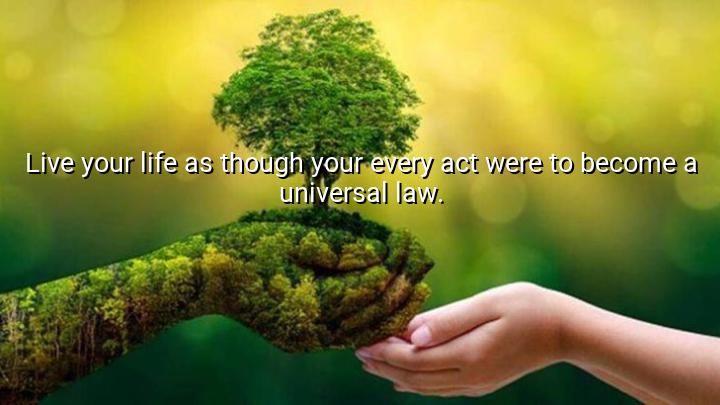




The quote "Live your life as though your every act were to become a universal law" by Immanuel Kant is a call to practice ethical behavior and personal responsibility. Kant is urging individuals to consider the moral implications of their actions by asking themselves what would happen if everyone were to act in the same way. This idea is rooted in his categorical imperative, a concept in his philosophy that encourages people to act only in ways that could be universally applied without contradiction. The essence of this quote is that individuals should strive to live with a sense of universal responsibility, ensuring that their actions are aligned with moral principles that can apply to everyone, everywhere.
Kant’s quote reflects his belief in the importance of moral consistency and reason. Instead of acting based on personal desires or situational convenience, he encourages a deeper reflection on the consequences of one's actions. If each act were to become a universal law, it would create a world governed by fairness, justice, and equity, where people consider the collective well-being in their decision-making. This requires a level of self-discipline and self-awareness, asking individuals to uphold the highest moral standards, not just for themselves but for the greater good of society.
The origin of the quote is deeply rooted in Kant’s philosophy, particularly in his work "Groundwork of the Metaphysics of Morals". In this work, Kant lays out his categorical imperative as a foundation for moral theory, which states that humans should act according to maxims that can be willed as a universal law. The quote reflects Kant’s commitment to rationality and moral law, emphasizing the importance of reason and autonomy in ethical decision-making. He believed that all individuals, as rational beings, have a moral duty to act in ways that respect the dignity and autonomy of others.
Ultimately, Kant’s quote serves as a powerful reminder to reflect on the moral and ethical dimensions of our actions. It encourages individuals to consider the broader implications of their behavior, ensuring that it aligns with values that could be universally endorsed. By living as though our actions could become universal laws, we contribute to creating a society that prioritizes justice, respect, and accountability for all.

AAdministratorAdministrator
Welcome, honored guests. Please leave a comment, we will respond soon