

Life is a dream for the wise, a game for the fool, a comedy for the rich, a tragedy for the poor.
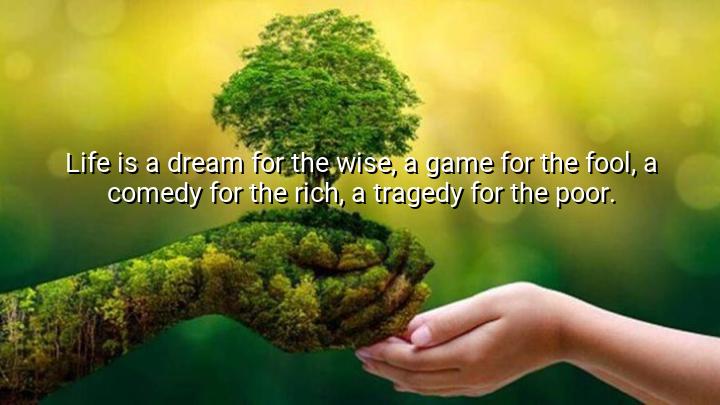




Sholom Aleichem’s quote, "Life is a dream for the wise, a game for the fool, a comedy for the rich, a tragedy for the poor," offers a profound reflection on how different individuals experience life based on their perspectives and circumstances. The quote suggests that the meaning and nature of life are subjective and can vary dramatically depending on one's wisdom, social status, and position in society. By contrasting the experiences of different groups of people, Aleichem emphasizes how perception shapes our understanding of existence.
The phrase "life is a dream for the wise" suggests that those who possess wisdom or insight see life in a more idealistic or transcendent way, perhaps finding a deeper meaning in its fleeting nature. For them, life might seem like a dream, something that is transient, mysterious, and full of possibilities. On the other hand, when Aleichem describes life as "a game for the fool," he highlights how those who lack wisdom may approach life with a more carefree, perhaps even reckless attitude, treating it as something to be played with rather than deeply understood.
In the next part of the quote, "a comedy for the rich," Aleichem alludes to the idea that the wealthy, who are often insulated from the struggles of everyday life, may view their existence with lightness or even irony. For them, life may seem like a game of fortune, full of entertainment and pleasure. In stark contrast, the quote’s ending, "a tragedy for the poor," points to how those who struggle with poverty often see life through the lens of suffering, hardship, and loss. For the poor, life can feel like an endless series of challenges, making it a much more somber and painful experience.
Aleichem’s quote not only paints a vivid picture of the diverse ways people experience life, but also serves as a commentary on the social inequalities that shape our perceptions. It reminds us that life, while universal, is unequal in its impact on different people, and how our circumstances—whether wealth, wisdom, or poverty—largely dictate how we view the world. The quote calls for empathy and a deeper understanding of the privileges and sufferings that influence our outlooks on existence.

AAdministratorAdministrator
Welcome, honored guests. Please leave a comment, we will respond soon