

Language, identity, place, home: these are all of a piece - just different elements of belonging and not-belonging.
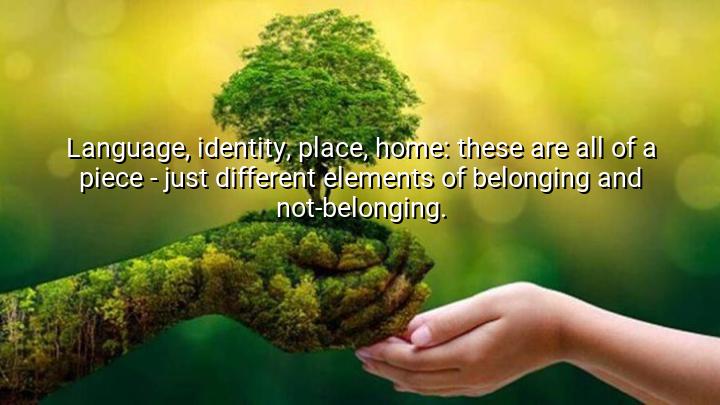




In this quote, Jhumpa Lahiri explores the interconnectedness of language, identity, place, and home, suggesting that all these elements play a crucial role in shaping one's sense of belonging. She indicates that these factors are not isolated but are deeply intertwined, each contributing to how we define ourselves and where we feel rooted. For Lahiri, these elements are fluid and can create a complex mix of belonging and not-belonging, especially for individuals with experiences of migration or cultural transition.
The mention of language underscores its vital role in forming connections to both personal identity and cultural heritage. Language is not just a tool for communication but also a marker of one’s place within a community. For those living in a foreign land or navigating between multiple cultures, language can be both an anchor and a barrier. It can provide a sense of home, while also highlighting the dissonance between where one is from and where one currently resides.
Lahiri’s words also point to the idea of place and home as key components in the construction of identity. The connection to a specific place can make someone feel rooted, while being in a foreign or unfamiliar place can evoke feelings of displacement. This tension between belonging and not-belonging is especially pronounced for those straddling multiple cultures, where home can be both an internal, emotional concept and an external, physical reality.
Ultimately, Lahiri’s quote reflects on the complexity of how individuals navigate the intersection of cultural and personal identity. The idea that belonging is not absolute, but rather shaped by overlapping experiences and influences, speaks to the nuanced realities of immigration, diaspora, and the ongoing search for home in a world that often feels divided.

AAdministratorAdministrator
Welcome, honored guests. Please leave a comment, we will respond soon