

Language as a communication tool is the primary element from which literature is created. Even in pre-literate societies, it exists as songs, riddles, or epics that are chanted.
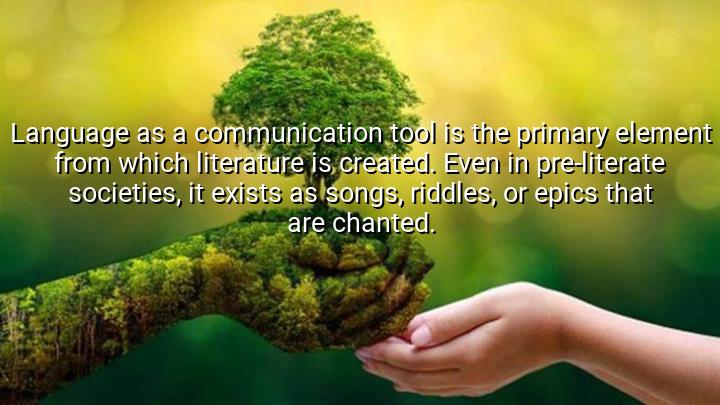




F. Sionil Jose’s quote emphasizes the central role of language as the fundamental tool for communication and the creation of literature. He argues that regardless of the form—whether it is written, oral, or performed—language serves as the core element from which all forms of literature arise. Even in pre-literate societies, before the invention of written scripts, stories and cultural knowledge were transmitted through songs, riddles, and epics, which were chanted or orally passed down through generations.
The origin of this perspective comes from Jose’s extensive background in literature and his deep understanding of the role of language in human culture. As a renowned Filipino writer, Jose has written about the significance of oral traditions in shaping the literature of various cultures. He recognizes that the power of language transcends written texts and exists in every form of communication that conveys stories, values, and emotions, even in societies without written language.
By mentioning songs, riddles, and epics, Jose underscores the adaptability of language in different forms of cultural expression. These oral traditions serve as early precursors to written literature, demonstrating that the desire to communicate and tell stories is innate to human societies, even before formal literacy was established. Language, in this context, is shown as a living, dynamic force that connects people through shared narratives.
Ultimately, Jose’s quote highlights the universality of language as the building block of human expression and literary creation. Whether through spoken word or written text, language is the vehicle for human stories, ideas, and emotions, making it the foundation of all literature across time and cultures. This underscores the importance of communication as not just a means of interaction but as the very essence of artistic and cultural creation.

AAdministratorAdministrator
Welcome, honored guests. Please leave a comment, we will respond soon