

Killing yourself is a major commitment, it takes a kind of courage. Most people just lead lives of cowardly desperation. It's kinda half suicide where you just dull yourself with substances.
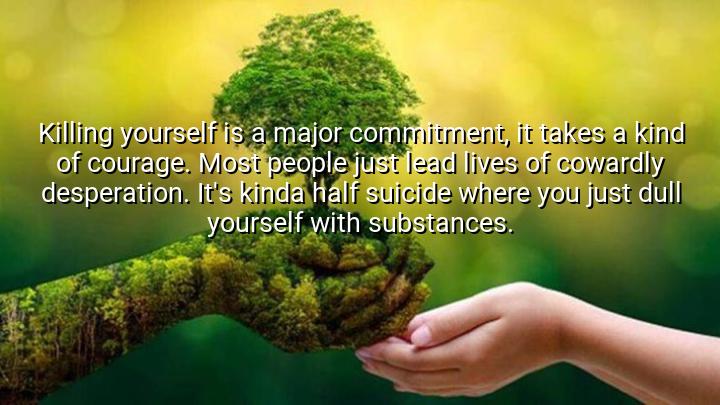




The quote "Killing yourself is a major commitment, it takes a kind of courage. Most people just lead lives of cowardly desperation. It's kinda half suicide where you just dull yourself with substances" by Robert Crumb explores the complex nature of despair and escapism. Crumb suggests that taking one's own life is not only a drastic decision but also an act that requires a form of courage, albeit a destructive one. He contrasts this with the more common approach people take to avoid facing their inner pain—using substances or distractions to numb themselves instead of confronting their difficulties directly.
Robert Crumb, a famous underground comic artist known for his raw and often controversial work, often delved into the darker aspects of human nature and society. This quote reflects his tendency to critique societal norms and the ways in which people avoid dealing with uncomfortable truths. Crumb is pointing out that while some people might take extreme measures like suicide to escape their suffering, others engage in a halfway form of escape, like using drugs or alcohol, which also dulls their emotional pain but without the finality of death.
The reference to cowardly desperation suggests that many people live in a state of emotional paralysis, too afraid to take radical actions but unable or unwilling to face the difficult truths of their existence. Instead of confronting their issues, they distract themselves with short-term fixes like substances or other forms of escapism. Crumb seems to be suggesting that these temporary solutions are forms of self-sabotage and a rejection of true emotional engagement with life.
Ultimately, the quote serves as a critique of how society handles pain and suffering. Crumb implies that people often choose the easier, less confronting path of self-destruction through numbness rather than facing their inner demons. His words challenge the reader to reflect on their own methods of coping with hardship and consider whether they are truly addressing the root causes of their despair or merely avoiding them.

AAdministratorAdministrator
Welcome, honored guests. Please leave a comment, we will respond soon