

I've learned that you shouldn't go through life with a catcher's mitt on both hands; you need to be able to throw something back.
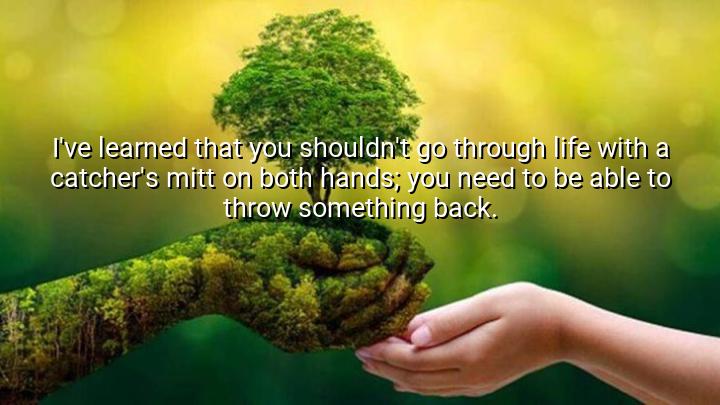




The quote by Maya Angelou emphasizes the importance of reciprocity, generosity, and active engagement in life. By stating, “I've learned that you shouldn't go through life with a catcher's mitt on both hands; you need to be able to throw something back,” Angelou highlights that life is not only about receiving support, kindness, or opportunities, but also about giving back and contributing. The metaphor of a catcher's mitt illustrates passivity, while throwing something back represents action, initiative, and responsibility.
Angelou underscores the value of balance between taking and giving. The quote suggests that personal growth and meaningful relationships require not just accepting what comes to us, but also sharing our knowledge, resources, or kindness with others. By actively participating rather than solely receiving, individuals foster mutual respect, community, and purpose.
Maya Angelou, a 20th-century American poet, memoirist, and civil rights activist, often explored themes of human dignity, empowerment, and social responsibility. This quote reflects her broader philosophy that life’s richness comes from connection and contribution, emphasizing that the ability to give back is as important as the ability to receive.
Ultimately, the quote serves as a reminder to cultivate a generous and proactive approach to life. Angelou encourages people to move beyond passivity, recognizing that true fulfillment comes from both learning and sharing, receiving and giving, and that the act of contributing enriches both the giver and the community.

AAdministratorAdministrator
Welcome, honored guests. Please leave a comment, we will respond soon