

It's such an amazing thing to be loved for who you are.
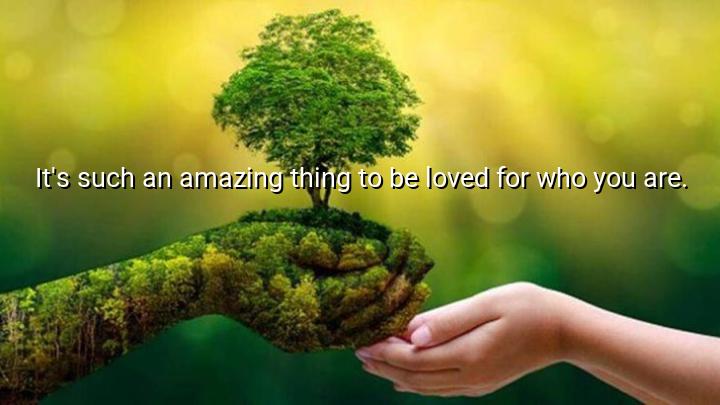




The quote by Debra Winger — "It's such an amazing thing to be loved for who you are." — speaks to the profound emotional experience of being accepted and cherished for your true self, without the need to pretend or conform. Winger highlights the value of unconditional love, where a person is appreciated for their genuine qualities, rather than for external traits or superficial aspects. This type of love fosters a deep sense of security, belonging, and authenticity in relationships.
Winger’s statement emphasizes the rare and special nature of being loved without conditions or expectations. In a world where people often feel pressure to meet certain standards or change themselves to gain approval, being loved for who you truly are brings immense freedom and peace. It allows individuals to relax and embrace their true selves, knowing they are accepted as they are, flaws and all.
This quote may also reflect Winger’s personal experiences and insights into the nature of love. As an actress, she may have encountered situations where she was judged or valued based on her public persona rather than her true identity. Her appreciation for being loved for who she is likely speaks to her desire for deeper, more meaningful connections that go beyond surface-level interactions.
Ultimately, Winger’s words remind us of the importance of self-acceptance and the power of authentic relationships. When people are loved for who they are, it creates a foundation of trust and emotional connection, allowing both individuals to flourish. This type of love is not only a source of joy, but also one of the most fulfilling experiences in life.

DVHung Dang Viet
This quote feels like a celebration of authenticity and acceptance. But I wonder if it also sets a high standard—are there times when people struggle to love others fully for who they are, especially when faced with differences or challenges? How can empathy and compassion help us move closer to this ideal in our relationships?
MLNguyen Mai Linh
Reading this, I’m reminded of how transformative unconditional love can be. It makes me think about relationships where love is conditional—based on achievements, appearance, or roles—and how limiting that can be. How do we unlearn those patterns and seek or offer love that embraces the whole person, flaws and all? It’s a powerful and hopeful idea.
DPNguyen Duong Phu
This quote sparks reflection on how rare and precious it is to be loved without masks or pretenses. But I also wonder, what happens when someone fears vulnerability and hides their true self? Does that prevent them from experiencing this amazing kind of love? It’d be interesting to discuss how trust and courage intersect in the journey to being fully known and loved.
LLLy Le
I find this statement beautiful but also bittersweet. It makes me think about the challenges of being authentic in a world that often pressures conformity. What does it take to create environments where people feel safe and valued for their true selves? How can we encourage more genuine connections where love isn’t conditional or performative?
UGUser Google
This quote resonates deeply because being loved for who we truly are is such a fundamental human need. I wonder, how many people actually experience this kind of unconditional acceptance? Is it something we find only in romantic relationships, or can it exist in friendships and family too? I’m also curious about how self-acceptance plays into this—can we only be loved for who we are if we first love ourselves?