

It was the Law of the Sea, they said. Civilization ends at the waterline. Beyond that, we all enter the food chain, and not always right at the top.
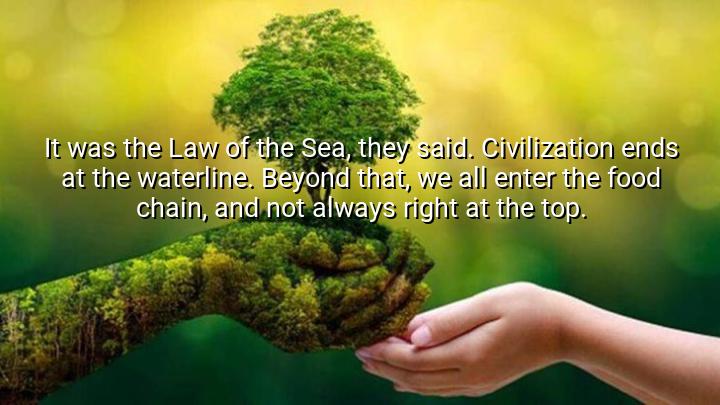




The quote by Hunter S. Thompson, “It was the Law of the Sea, they said. Civilization ends at the waterline. Beyond that, we all enter the food chain, and not always right at the top,” paints a vivid and unsettling picture of the chaos and danger that exist beyond the boundaries of civilization. Thompson uses the metaphor of the sea to symbolize the unpredictable and often lawless nature of the natural world, where the social structures and protections of civilized society no longer apply. In this realm, survival depends on instinct, strength, and luck—not law or order.
Hunter S. Thompson, the founder of Gonzo journalism, was known for his raw, confrontational writing style and his exploration of counterculture, violence, and the limits of human control. This quote comes from his book Generation of Swine, a collection of essays that delves into politics, society, and the darker sides of American culture. Here, he draws a stark contrast between the illusion of control that society offers and the brutal realism of nature, especially in spaces where human dominance fades.
The phrase “civilization ends at the waterline” suggests that once we leave the comfort and structure of land-based society, we are exposed to the true laws of survival—what Thompson calls the “food chain.” It’s a reminder that beneath the surface of modern life lies a primordial reality where humans are not guaranteed superiority. Whether facing the elements, wildlife, or the psychological pressures of isolation and fear, the sea becomes a space where the masks of civilization fall away.
Ultimately, Thompson’s quote is both philosophical and cautionary, exploring the thin veneer of order that separates modern life from chaos. It serves as a reflection on human vulnerability, especially when confronted with forces far greater than ourselves—whether literal, like the ocean, or metaphorical, like personal or societal breakdowns. It’s a call to recognize the fragility of the systems we depend on and the primal instincts that still lie beneath.

AAdministratorAdministrator
Welcome, honored guests. Please leave a comment, we will respond soon