

It is the earnest hope of our people that the world may see the day when all nuclear weapons are abolished.
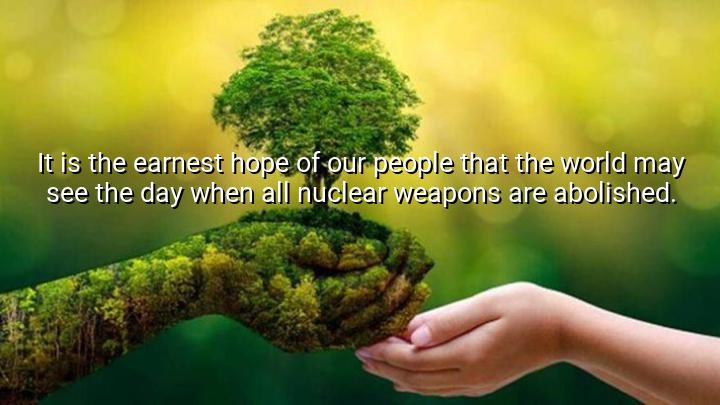




The quote "It is the earnest hope of our people that the world may see the day when all nuclear weapons are abolished" by Eisaku Sato, the former Prime Minister of Japan, reflects a deep commitment to global peace and disarmament. Sato, who served as Prime Minister during the 1960s and 1970s, advocates for the complete abolition of nuclear weapons, a vision rooted in Japan’s tragic experience with the aftermath of the Hiroshima and Nagasaki bombings during World War II. The statement emphasizes the hope that the world will one day be free from the threat posed by nuclear weapons.
Sato’s words also convey the humanitarian and ethical imperative behind disarmament. Japan, having been the only nation to suffer the use of atomic bombs, carries a unique and profound perspective on the devastating consequences of nuclear warfare. His call for the abolition of nuclear weapons is not only a political stance but a moral one, as it reflects the desire to protect future generations from the horrors of nuclear conflict.
The quote encapsulates the vision of many post-war leaders who sought to prevent the recurrence of global destruction through the use of atomic weapons. Sato’s advocacy for nuclear disarmament aligns with Japan's broader commitment to peace and non-aggression, principles enshrined in its post-war constitution. His leadership on the issue highlighted Japan’s role in promoting global peace, urging other nations to work toward a world where such weapons are no longer a threat.
Sato’s message remains relevant today, as the conversation about nuclear disarmament continues to be a significant global issue. His quote serves as a reminder that the pursuit of peace and the prevention of nuclear war is not just a political goal but an essential part of ensuring the survival and well-being of humanity. It reflects the enduring hope of a world where warfare no longer relies on weapons of mass destruction.

AAdministratorAdministrator
Welcome, honored guests. Please leave a comment, we will respond soon