

It is for us to pray not for tasks equal to our powers, but for powers equal to our tasks, to go forward with a great desire forever beating at the door of our hearts as we travel toward our distant goal.
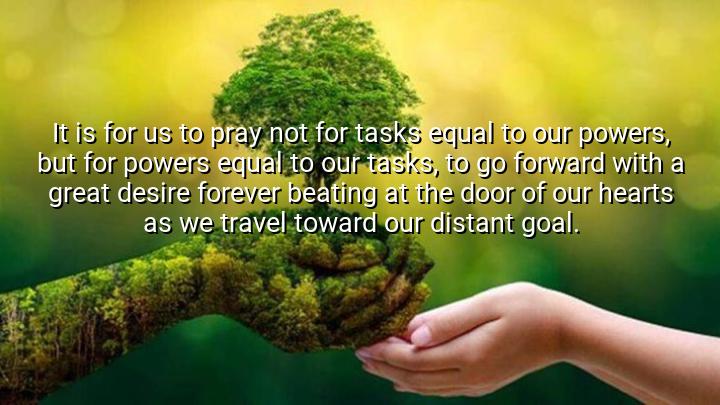




In the quote "It is for us to pray not for tasks equal to our powers, but for powers equal to our tasks, to go forward with a great desire forever beating at the door of our hearts as we travel toward our distant goal," Helen Keller expresses a profound reflection on perseverance, personal growth, and the pursuit of meaningful goals. Keller, who overcame the challenges of being both blind and deaf, encourages individuals to focus not on asking for easier tasks, but rather on developing the strength and resilience needed to tackle the challenges they face. Instead of wishing for obstacles to be removed, she suggests that we should pray for the internal power to face and overcome them.
The core message is that strength—whether physical, mental, or emotional—grows through facing challenges. Keller emphasizes the importance of having the inner power to meet the demands of life, suggesting that true growth comes from confronting difficult tasks and continuing to strive towards a distant goal. Rather than avoiding difficulty, the quote advocates for cultivating the capabilities to rise to the occasion, even when the path ahead seems daunting.
Keller’s idea also highlights the role of desire and motivation in achieving one's aspirations. The great desire she speaks of is a driving force, one that keeps individuals moving forward even when faced with hardships or setbacks. This inner drive helps sustain long-term progress, fueling persistence toward a goal, no matter how far or challenging it may seem.
Ultimately, Keller’s quote is a call to embrace life’s challenges with courage and determination. By focusing not on the difficulty of the task but on developing the strength to handle it, one can achieve personal growth and eventually reach their goals. It emphasizes the value of enduring desire, inner strength, and the willingness to evolve as we progress toward our ambitions.

AAdministratorAdministrator
Welcome, honored guests. Please leave a comment, we will respond soon