

It is essential to employ, trust, and reward those whose perspective, ability, and judgment are radically different from yours. It is also rare, for it requires uncommon humility, tolerance, and wisdom.
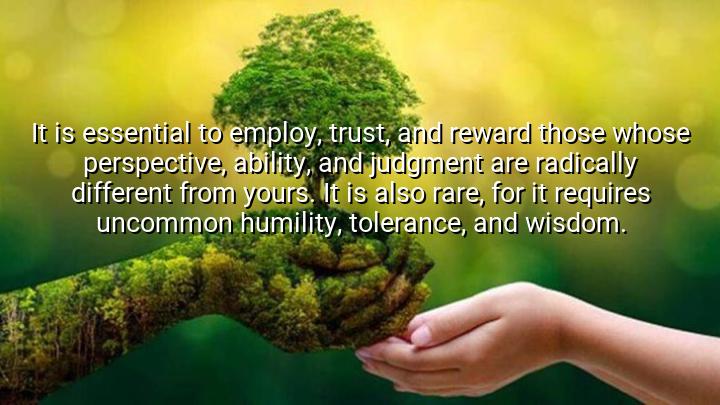




The quote “It is essential to employ, trust, and reward those whose perspective, ability, and judgment are radically different from yours. It is also rare, for it requires uncommon humility, tolerance, and wisdom” by Dee Hock highlights the importance of embracing diversity in leadership and organizational success. True leaders recognize that their own knowledge and viewpoint are limited, and that progress often comes from engaging with people who think differently. By valuing different perspectives, leaders create more innovative, resilient, and well-rounded teams.
The origin of this quote lies in Hock’s experience as the founder and CEO of Visa, where he revolutionized the financial world by building a decentralized organizational model. Hock believed that effective leadership meant creating systems where individuals with varied abilities, judgments, and backgrounds could collaborate freely. His philosophy reflected the conviction that trust and empowerment are more powerful than control, and that true innovation requires drawing strength from diversity rather than conformity.
The quote also underlines the challenge of practicing this principle. To surround oneself with people who disagree or challenge one’s ideas requires humility, since it means admitting one does not have all the answers. It also demands tolerance for differing views and the wisdom to recognize the long-term value of constructive tension and debate. Many leaders fail in this area because ego, insecurity, or a desire for control prevent them from embracing differences.
Ultimately, Hock’s insight is a call for leaders to cultivate a culture of inclusion and trust. By employing and rewarding those with radically different viewpoints, leaders not only expand their organization’s capacity for problem-solving but also demonstrate the rare qualities of humility and wisdom. In doing so, they transform leadership from an exercise in authority into a collective pursuit of excellence.

AAdministratorAdministrator
Welcome, honored guests. Please leave a comment, we will respond soon