

It is difficult to separate oneself from one's design moralities.
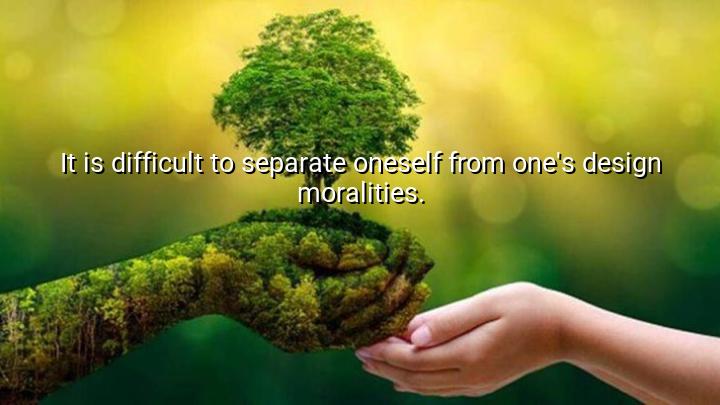




The quote by David Chipperfield reflects the deep connection between a designer’s identity and their design moralities. When he says, “It is difficult to separate oneself from one’s design moralities,” he means that an architect or designer’s personal values, principles, and beliefs inevitably shape their work. Design is not created in a vacuum—it is a reflection of how a creator sees the world, interprets human needs, and balances functionality with aesthetics.
This statement underscores the idea that design moralities are not just technical guidelines but deeply personal frameworks. For Chipperfield, these moralities may include commitments to sustainability, contextual sensitivity, and respect for cultural heritage. Because these values are so tied to the individual, they cannot easily be cast aside. Every project becomes, in some way, an extension of the designer’s ethical stance and worldview.
The origin of this quote lies in Chipperfield’s career as a renowned British architect, celebrated for projects such as the Neues Museum restoration in Berlin and the Hepworth Wakefield Gallery. Known for his restrained and thoughtful approach, Chipperfield often emphasizes responsibility in architecture, arguing that design should serve society rather than chase trends. His words reflect his belief that architects must stay true to their own design conscience, even when faced with external pressures from clients, markets, or fashion.
Ultimately, Chipperfield’s insight is a reminder that authentic design stems from integrity. A designer cannot easily detach their work from their moral compass, because their principles are embedded in every choice—materials, forms, and concepts. His statement encourages architects and designers to embrace this connection, recognizing that their design moralities are not limitations but essential guides toward meaningful and responsible creations.

AAdministratorAdministrator
Welcome, honored guests. Please leave a comment, we will respond soon