

It is becoming clear that the old platitudes can no longer be maintained, and that if we wish to improve our morals we must first improve our knowledge.
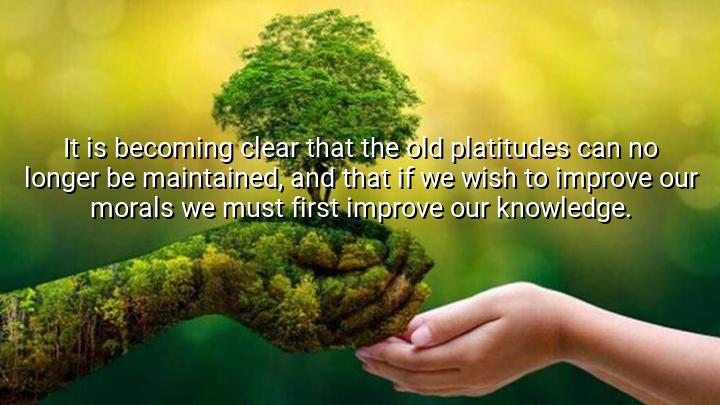




The quote by Havelock Ellis, “It is becoming clear that the old platitudes can no longer be maintained, and that if we wish to improve our morals we must first improve our knowledge,” emphasizes the connection between education and ethical development. Ellis, a British physician, psychologist, and social reformer, suggests that outdated moral clichés or conventional wisdom are insufficient for guiding society. True moral progress, he argues, depends on a foundation of knowledge and understanding rather than mere repetition of traditional sayings.
The meaning of the quote is that intellectual growth and informed reasoning are prerequisites for genuine ethical behavior. Ellis asserts that improving one’s knowledge equips individuals with the tools to make better moral decisions, as morality is informed by awareness of human nature, social consequences, and broader truths. In other words, ethical conduct is strengthened by comprehension and insight rather than blind adherence to inherited platitudes.
The origin of this perspective comes from Ellis’ work in the late 19th and early 20th centuries, during which he explored human sexuality, psychology, and social reform. He often challenged conventional beliefs and encouraged critical thinking as a path to personal and societal improvement. His emphasis on knowledge as a basis for morality reflects the broader intellectual movement of his time, which valued reason, empirical evidence, and education as forces for social progress.
Ultimately, the quote underscores the importance of coupling knowledge with moral development. Ellis reminds us that relying solely on traditional platitudes is insufficient, and that advancing society’s morals requires cultivating an informed and thoughtful citizenry capable of understanding complex ethical issues and making reasoned decisions.

AAdministratorAdministrator
Welcome, honored guests. Please leave a comment, we will respond soon