

It is a religious duty for those who cook to learn how to prepare food in different ways, hygienically, for the table, so that it may be eaten with enjoyment.
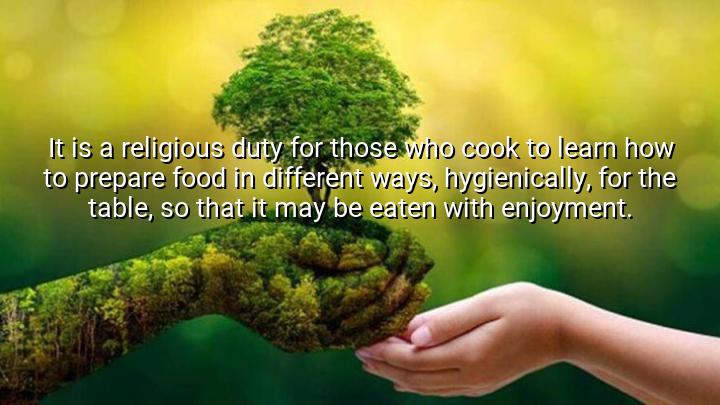




This quote by Ellen G. White emphasizes the spiritual and moral significance of cooking and food preparation. By declaring it a "religious duty," White elevates the act of cooking beyond mere routine—it becomes an act of care, responsibility, and service. She believed that those who prepare food should not only focus on nourishment but also prioritize hygiene, variety, and presentation, ensuring that meals are both healthy and enjoyable.
The mention of preparing food "in different ways" highlights the importance of creativity and knowledge in the kitchen. White encourages those who cook to expand their skills, adapt to changing needs, and avoid monotony. Meanwhile, the emphasis on hygiene reflects her broader concern with health and well-being, key aspects of her teachings within the context of Christian living. Meals, in her view, should support both physical vitality and spiritual clarity.
The origin of this quote lies in Ellen G. White’s influential role as one of the founders of the Seventh-day Adventist Church. A strong advocate for health reform, she promoted vegetarianism, moderation, and wholesome living as essential to both personal piety and societal progress. Through her writings and teachings, she urged people to treat diet and lifestyle as integral components of their faith.
Ultimately, White’s message reframes cooking as a sacred task—not just about feeding bodies, but about fostering joy, health, and spiritual purpose. Her quote reminds us that the kitchen can be a place of devotion, where thoughtful preparation transforms everyday meals into acts of love and religious expression.

AAdministratorAdministrator
Welcome, honored guests. Please leave a comment, we will respond soon