

Information is not knowledge.
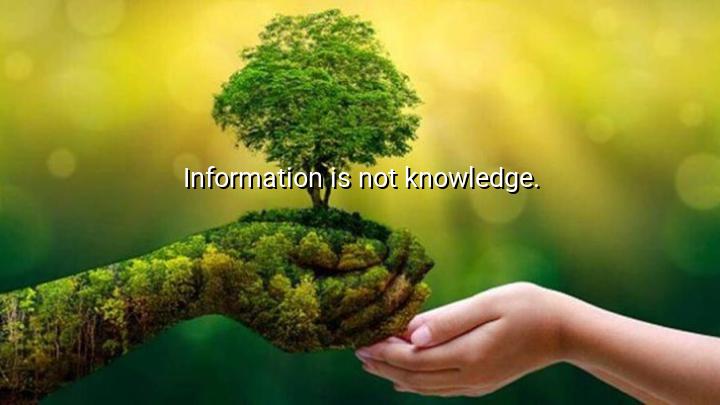




The quote, “Information is not knowledge,” is attributed to Albert Einstein, one of the most influential physicists of the 20th century. Einstein was not only a scientist but also a philosopher of science, deeply concerned with the way people understood and applied ideas. In this short but profound statement, he draws a clear distinction between information, which refers to raw data or facts, and knowledge, which implies comprehension, context, and meaningful understanding.
The first part, “information,” refers to the accumulation of details, numbers, or statements. Information by itself is neutral and does not guarantee wisdom or insight. Einstein emphasizes that the mere possession of facts does not make a person truly knowledgeable. Without interpretation, critical thinking, and application, information remains shallow and disconnected from real understanding.
The second part, “knowledge,” involves processing information through reasoning, experience, and reflection. Knowledge transforms information into something usable, guiding decision-making and fostering deeper insight into the world. In this sense, Einstein highlights that thinking, questioning, and connecting ideas are what turn scattered information into real knowledge.
Overall, this quote reflects Einstein’s lifelong advocacy for critical thinking and creativity over rote memorization. He believed that true education should cultivate the ability to analyze and apply ideas, rather than simply store information. In today’s age of digital technology and instant access to facts, his words remain especially relevant: having access to information is easy, but developing it into knowledge requires effort, reflection, and wisdom.

AAdministratorAdministrator
Welcome, honored guests. Please leave a comment, we will respond soon