

In this world you've just got to hope for the best and prepare for the worst and take whatever God sends.
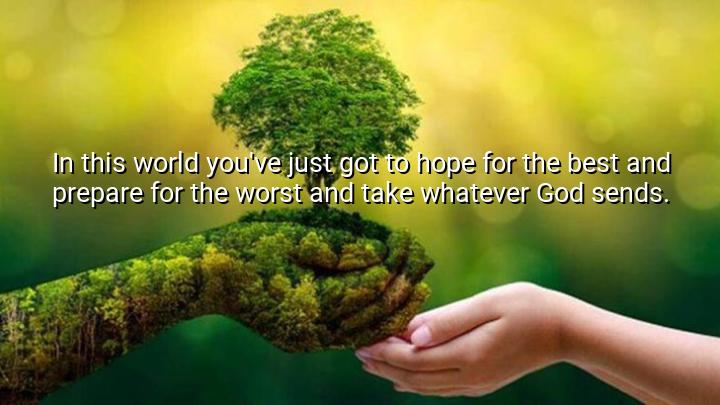




The quote "In this world you've just got to hope for the best and prepare for the worst and take whatever God sends" by Lucy Maud Montgomery reflects a practical and resilient approach to life’s uncertainties. Montgomery, the author best known for creating the Anne of Green Gables series, speaks to the importance of maintaining optimism while simultaneously preparing for life’s challenges. The idea is that while it’s essential to hope for positive outcomes, one must also be ready to face hardships, knowing that life can be unpredictable.
Montgomery’s words are rooted in her own experience of dealing with adversity. She lived through personal struggles, including the death of her mother and the challenges of raising her children, which influenced much of her writing. This quote aligns with the theme of perseverance that runs through her works, particularly in the character of Anne Shirley, who often faces setbacks but maintains a hopeful outlook despite difficult circumstances. The sentiment in the quote suggests a balance between faith and pragmatism in navigating life’s difficulties.
The phrase "take whatever God sends" suggests a spiritual dimension to Montgomery’s philosophy, where she acknowledges that not everything is within human control. It reflects the notion of acceptance and faith in a higher power, suggesting that, no matter what happens, one must embrace the circumstances with grace. This aspect of the quote conveys a sense of humility, recognizing that there are forces beyond individual influence, and that the best response is to accept what comes with an open heart.
Overall, the quote encourages a balanced perspective on life: to remain hopeful for the best outcomes, to be prepared for the inevitable challenges, and to have the faith to accept whatever life or God may bring. Montgomery’s words are a reminder of the importance of resilience, optimism, and acceptance in the face of life’s unpredictable journey.

AAdministratorAdministrator
Welcome, honored guests. Please leave a comment, we will respond soon