

In this world, with thy earthly life, thou art under heaven, stars, and elements, also under hell and devils; all ruleth in thee, and over thee.
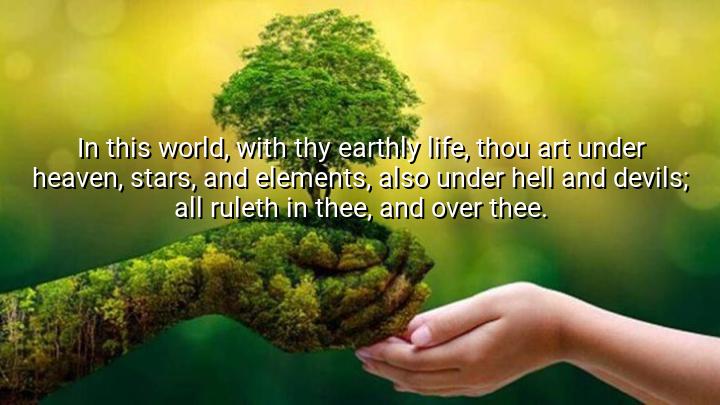




In this quote, Jakob Bohme expresses a spiritual view of the human condition, suggesting that a person’s life is shaped and influenced by both heaven and hell, as well as the natural and supernatural forces in the world. He emphasizes the interconnectedness of the human being with the cosmic order, implying that we are not only under the influence of divine forces (heaven, stars, and elements) but also subject to the darker forces of hell and devils. This perspective conveys the idea that both light and darkness, good and evil, are inherent parts of human existence, and they rule within us and over us in various ways.
Bohme’s quote suggests that human life is a battleground where spiritual forces—both benevolent and malevolent—compete for influence. The reference to being "under heaven, stars, and elements" reflects the divine order and the guiding influence of celestial forces, while "under hell and devils" speaks to the destructive, chaotic forces that can lead people away from goodness. This duality represents the struggle between higher and lower aspects of existence that humans must navigate in their journey through life.
The origin of this quote lies in Bohme's mystical and theosophical writings. As a German philosopher and Christian mystic, Bohme believed in the spiritual nature of the universe and sought to understand the underlying divine truths governing both the material and spiritual worlds. His works, such as Aurora and The Way to Christ, explore the nature of good and evil, the role of human will, and the relationship between the individual soul and the greater cosmic order. His ideas influenced later mystics and philosophers in both Christian and esoteric traditions.
Ultimately, Bohme’s quote highlights the complexity of human existence, where we are constantly affected by and engaged with the cosmic forces of both light and darkness. It calls attention to the spiritual struggles that shape our lives and suggests that true understanding comes from recognizing the balance between the divine and infernal forces within and around us. This reflection invites us to consider how we are influenced by external and internal factors in our pursuit of spiritual growth and self-understanding.

AAdministratorAdministrator
Welcome, honored guests. Please leave a comment, we will respond soon