

In the past the man has been first; in the future the system must be first... The first object of any good system must be that of developing first class men.
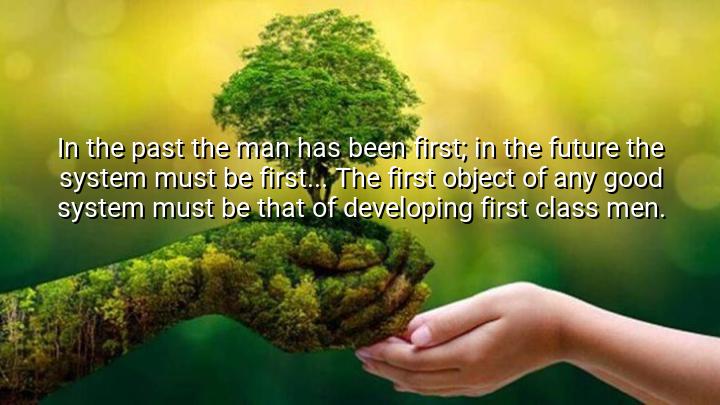




Frederick W. Taylor’s quote addresses the shift in societal and organizational focus from prioritizing the individual to emphasizing the system. In the past, human effort and capabilities were considered the primary drivers of success, with the man being at the forefront of decision-making and performance. However, Taylor suggests that in the future, the system itself must take precedence over individual actions. He argues that a strong system creates the foundation for success, benefiting both the organization and the people within it.
The core idea in Taylor's quote is that the development of people is central to the success of any organization, but it should be achieved through a well-structured and effective system. When Taylor refers to the system, he emphasizes that the structures, processes, and frameworks within which people operate must be optimized to cultivate talent. The focus should not only be on individual actions but on creating an environment where people can thrive through proper organization and training.
Taylor’s notion that the “first object” of any good system is to develop “first class men” highlights his belief in the importance of training and education in the workforce. He viewed the creation of efficient systems as essential for fostering skilled and competent individuals who could contribute meaningfully to the goals of the organization. By improving the system, the individual’s potential could be maximized, leading to greater productivity and innovation.
The quote is also reflective of Taylor's pioneering work in scientific management, which sought to optimize workplace efficiency by standardizing tasks and improving the way workers interacted with the systems around them. Taylor’s vision for the future emphasized that human potential should be nurtured within a well-designed framework, one that supports and sustains growth, rather than relying solely on the efforts of individuals.

AAdministratorAdministrator
Welcome, honored guests. Please leave a comment, we will respond soon