

In the past, I've visited remote places - North Korea, Ethiopia, Easter Island - partly as a way to visit remote states of mind: remote parts of myself that I wouldn't ordinarily explore.
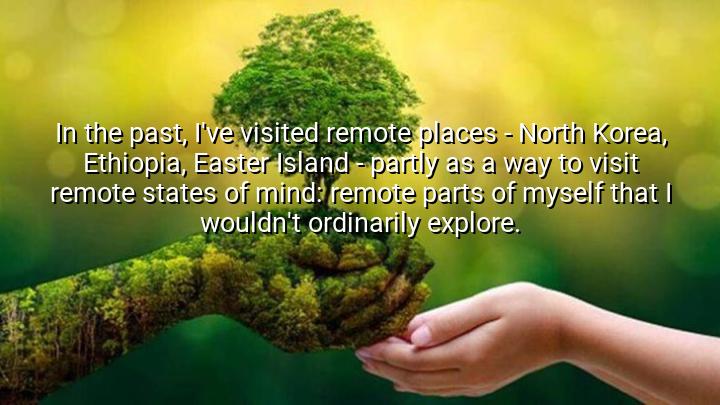




The quote by Pico Iyer explores the relationship between travel and self-discovery. Iyer suggests that visiting remote places—such as North Korea, Ethiopia, and Easter Island—is not only about seeing new lands but also about accessing remote states of mind. Travel becomes a tool for exploring parts of the self that are usually hidden, unexamined, or unfamiliar, highlighting the introspective side of adventure.
By linking physical remoteness to psychological exploration, Iyer emphasizes how isolation and distance from everyday life can encourage reflection and self-awareness. Remote locations, removed from the distractions of routine, allow travelers to confront their inner thoughts, confront fears, and discover new perspectives on life and identity.
The quote also underscores Iyer’s broader philosophy on the transformative power of travel. For him, journeys are not solely about external experiences but about fostering personal growth and deepening understanding of oneself. Travel acts as both a mirror and a lens, showing the traveler who they are while offering fresh ways to interpret the world.
The origin of this quote comes from Pico Iyer, a renowned travel writer and essayist known for blending observations about culture with introspective reflections on identity and spirituality. His writing often focuses on how physical journeys intersect with internal exploration, emphasizing that travel can serve as a gateway to self-discovery and mental expansion, especially in places that are unusual, remote, or challenging.

AAdministratorAdministrator
Welcome, honored guests. Please leave a comment, we will respond soon