

In our factory, we make lipstick. In our advertising, we sell hope.
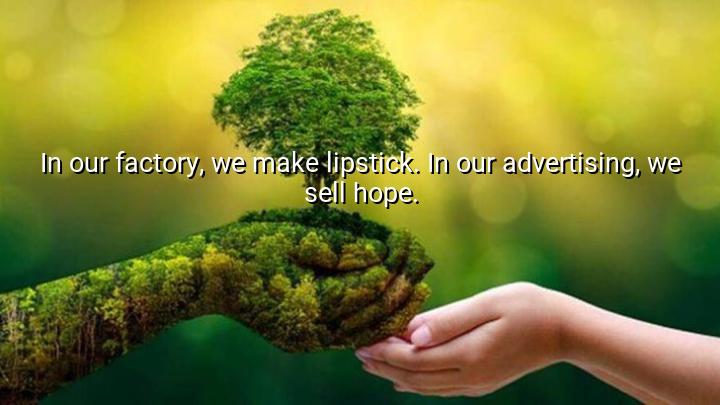




The quote "In our factory, we make lipstick. In our advertising, we sell hope." by Peter Nivio Zarlenga highlights the discrepancy between a product’s actual purpose and the emotional appeal used in marketing. Zarlenga, a writer and philosopher, emphasizes how companies often use advertising to tap into deeper emotions and aspirations rather than focusing solely on the product itself. While a company may produce a tangible item like lipstick, its advertisements often promise something more intangible—in this case, hope.
The statement points to the power of marketing in shaping public perception. Lipstick, as a physical product, serves a practical purpose, but through advertising, it is transformed into a symbol of beauty, confidence, or even self-worth. Zarlenga is drawing attention to how advertising doesn’t just sell a product but also sells a lifestyle, desire, or promise that taps into deeper human emotions and needs.
Zarlenga’s words also suggest that the role of advertising is not just about promoting consumers to buy goods, but about fulfilling a deeper psychological need. The hope in the advertisement may represent more than just the promise of improved appearance—it is the idea that using the product will lead to an enhanced life, greater happiness, or social acceptance. This manipulation of emotions is central to modern advertising strategies.
Ultimately, Zarlenga’s quote serves as a critique of the way advertising plays a crucial role in shaping consumer culture. It reminds us that products like lipstick are often marketed not just for their functional value but for the emotional satisfaction they promise. It’s a commentary on the psychological influence that advertising has in selling dreams and desires, sometimes more powerfully than the product itself.

AAdministratorAdministrator
Welcome, honored guests. Please leave a comment, we will respond soon