

In each action we must look beyond the action at our past, present, and future state, and at others whom it affects, and see the relations of all those things. And then we shall be very cautious.
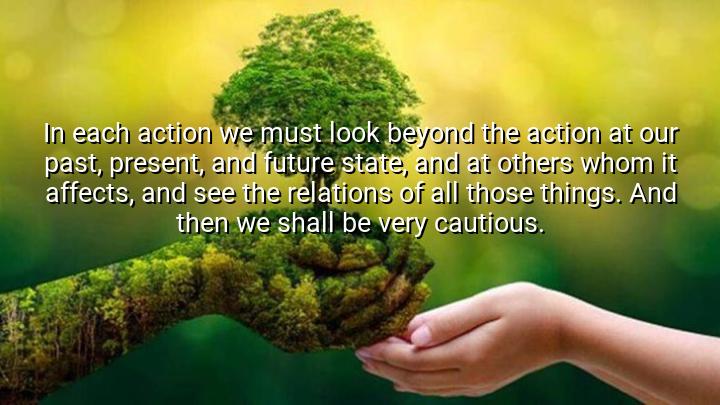




In this quote, Blaise Pascal, a French philosopher, mathematician, and theologian, advises a thoughtful and reflective approach to decision-making. He suggests that before acting, we must consider not only the immediate action itself but also its impact on our past, present, and future state. By recognizing the broader context of our choices, we can better understand the consequences they may have on ourselves and others. Pascal implies that this level of reflection leads to greater caution in our decisions.
Pascal’s philosophy emphasizes the importance of self-awareness and the interconnectedness of all aspects of life. He argues that every action is part of a larger web of relationships, not just with our own timeline but also with the people and events that surround us. By considering how our actions fit into this intricate network, we are less likely to make rash or impulsive decisions that might lead to negative consequences.
The quote also reflects Pascal's belief in the significance of prudence and thoughtfulness. By seeing how our choices relate to the past, present, and future, and how they affect others, we develop a deeper sense of responsibility. This perspective encourages us to be aware of the long-term effects of our actions, and how they may influence both our lives and the lives of others in ways we might not initially foresee.
Ultimately, Pascal’s statement is a call for mindfulness and reflection in all aspects of decision-making. It reminds us that acting with awareness and understanding of the broader context is key to making wise and responsible choices. This cautious approach leads to more considerate actions, where we account for the complexities of life and the ripple effects of our decisions.

AAdministratorAdministrator
Welcome, honored guests. Please leave a comment, we will respond soon