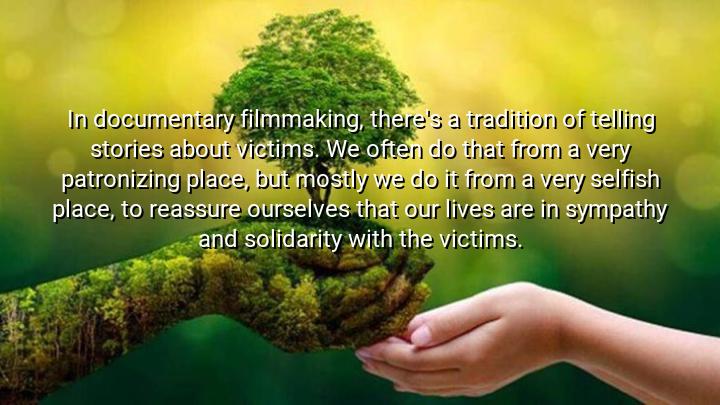
In documentary filmmaking, there's a tradition of telling stories about victims. We often do that from a very patronizing place, but mostly we do it from a very selfish place, to reassure ourselves that our lives are in sympathy and solidarity with the victims.
In documentary filmmaking, there's a tradition of telling stories about victims. We often do that from a very patronizing place, but mostly we do it from a very selfish place, to reassure ourselves that our lives are in sympathy and solidarity with the victims.
In documentary filmmaking, there's a tradition of telling stories about victims. We often do that from a very patronizing place, but mostly we do it from a very selfish place, to reassure ourselves that our lives are in sympathy and solidarity with the victims.
In documentary filmmaking, there's a tradition of telling stories about victims. We often do that from a very patronizing place, but mostly we do it from a very selfish place, to reassure ourselves that our lives are in sympathy and solidarity with the victims.
In documentary filmmaking, there's a tradition of telling stories about victims. We often do that from a very patronizing place, but mostly we do it from a very selfish place, to reassure ourselves that our lives are in sympathy and solidarity with the victims.
In documentary filmmaking, there's a tradition of telling stories about victims. We often do that from a very patronizing place, but mostly we do it from a very selfish place, to reassure ourselves that our lives are in sympathy and solidarity with the victims.






AAdministratorAdministrator
Welcome, honored guests. Please leave a comment, we will respond soon