

I'm not British. I'm not American. I'm not French. Whatever thing they practise, that is their business. I am an African. I am Rwandese.
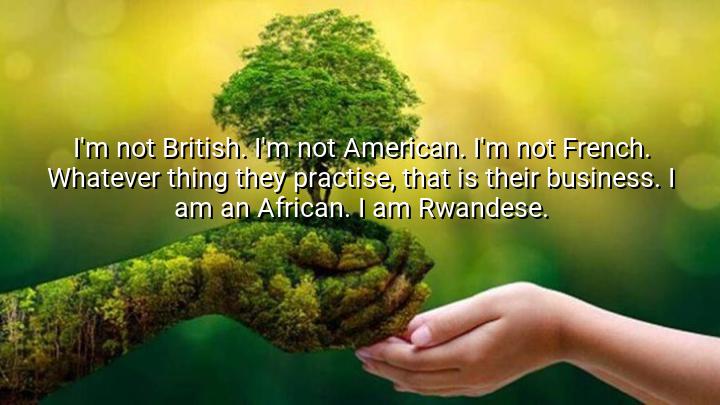




This quote by Paul Kagame, the President of Rwanda, is a strong assertion of national identity, sovereignty, and cultural pride. By declaring, “I'm not British. I'm not American. I'm not French…”, Kagame distances himself and his nation from the Western powers that have historically exerted political, economic, and cultural influence over African countries. His emphasis that “whatever thing they practise, that is their business” reflects a call for independence from external ideologies or interference.
The statement, “I am an African. I am Rwandese,” is more than a patriotic declaration—it is a reaffirmation of Rwanda’s self-determination and post-colonial resilience. Kagame, who played a pivotal role in ending the 1994 Rwandan genocide and rebuilding the nation, uses this quote to remind both internal and external audiences that Rwanda is forging its own path forward. This emphasis on Africanness and Rwandan identity seeks to empower citizens to take pride in their heritage and to reject the need to emulate foreign models blindly.
The origin of this quote can be traced to Kagame’s broader political philosophy, which champions African solutions to African problems. His leadership style often prioritizes pragmatism, discipline, and homegrown development strategies, which have contributed to Rwanda’s rapid transformation in areas like infrastructure, technology, and governance. His insistence on autonomy challenges the long-standing neocolonial tendencies that still shape international relations with Africa.
In essence, Kagame’s quote is a powerful reminder of the importance of cultural authenticity and political sovereignty. It encourages African nations to define their own values, systems, and aspirations, rather than copying those of former colonial powers. By anchoring his identity firmly in being African and Rwandese, Kagame sets a tone of confidence, dignity, and determination for the continent’s future.

AAdministratorAdministrator
Welcome, honored guests. Please leave a comment, we will respond soon