

I'm a romantic; a sentimental person thinks things will last, a romantic person hopes against hope that they won't.
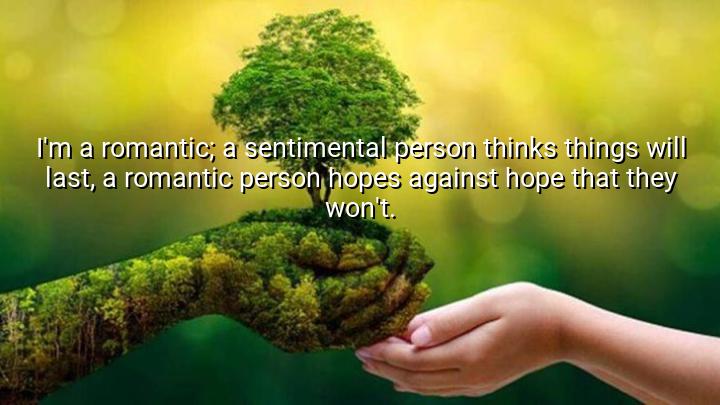




The quote "I'm a romantic; a sentimental person thinks things will last, a romantic person hopes against hope that they won't" by F. Scott Fitzgerald explores the difference between romanticism and sentimentality. Fitzgerald, a renowned American writer known for his works on love, wealth, and the American Dream, uses this quote to highlight the tension between idealism and realism. A sentimental person, he suggests, tends to hold onto the belief that good things will endure, clinging to the hope that things will last forever. In contrast, a romantic person is someone who is not necessarily hopeful that things will last, but rather embraces the ephemeral nature of life and love, cherishing moments even though they know they may fade.
The origin of this quote comes from Fitzgerald's view of romanticism, which often involved longing, unattainable dreams, and a sense of impermanence. In his life and writings, Fitzgerald frequently explored the transient nature of love and relationships, especially in works like The Great Gatsby, where love and aspiration are deeply intertwined with illusion and disappointment. His idea of a romantic acknowledges that love and moments of beauty can be fleeting, yet there is a sense of passion and vitality in embracing their temporary nature.
This distinction between being romantic and sentimental is key to understanding Fitzgerald’s philosophical outlook. Sentimentality is about holding onto the past and expecting permanence, while romanticism involves an acceptance of the uncertainty and fragility of life. For Fitzgerald, the romantic sees beauty in fleeting moments, not expecting them to last forever, but finding meaning in their temporary nature. Hope is central here, but it is a kind of hope that doesn’t expect fulfillment in a traditional, lasting sense.
Ultimately, Fitzgerald's quote reflects a deeper contemplation on how we view love and life. The romantic is not naive but embraces the impermanence of emotions and experiences, recognizing that the transitory nature of things is what gives them their depth and significance. It’s about appreciating the present moment while understanding that it cannot last forever.

AAdministratorAdministrator
Welcome, honored guests. Please leave a comment, we will respond soon