

I'm a pessimist because of intelligence, but an optimist because of will.
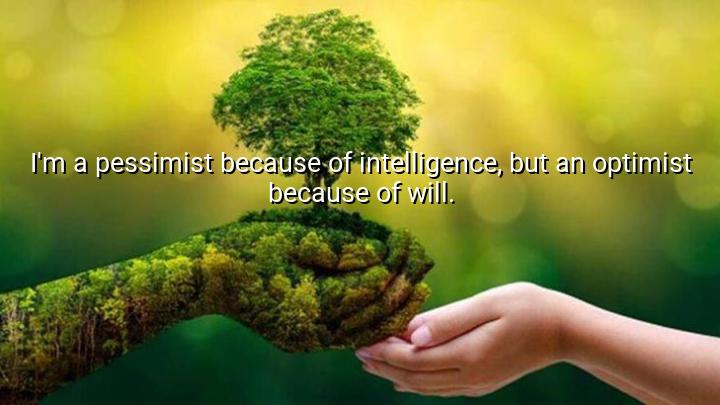




The quote "**I'm a pessimist because of intelligence, but an optimist because of will," by Antonio Gramsci, reveals the tension between rational thought and personal resolve. Gramsci, an Italian philosopher and communist theorist, suggests that intelligence leads him to a pessimistic view of the world, as he sees the realities of social, political, and economic structures, which often seem unjust or unchangeable. However, his will—his inner drive and commitment to change—motivates him to remain an optimist, believing that action and determination can shape a better future, even in the face of adversity.
Gramsci’s statement reflects the complex interplay between cognition and willpower. Intelligence gives him the ability to analyze the world critically, recognizing its flaws and limitations. However, it is his will—his belief in the potential for transformation and resilience—that allows him to hold onto hope. The quote emphasizes that while knowledge of the world might lead one to despair, the strength of the human will can overcome that despair and foster optimism.
The origin of this quote lies in Gramsci's life and work as a Marxist thinker and activist. Imprisoned by Mussolini’s fascist regime for his political beliefs, Gramsci was acutely aware of the difficulties and struggles faced by the working class and oppressed people. His concept of hegemony and the importance of cultural and political struggle often pointed to a pessimistic view of social change. Yet, his own personal commitment to the cause of social justice and his belief in human agency reflect the optimism rooted in his will to act, even when circumstances seemed bleak.
In a broader sense, Gramsci’s quote speaks to the human experience of grappling with reality. While we may have a clear-sighted understanding of the challenges we face, it is our willpower—our decision to keep striving for a better future—that fuels optimism. Gramsci’s words remind us that intelligence may reveal the limitations of the world, but will is what enables us to work toward change and hope for progress.

AAdministratorAdministrator
Welcome, honored guests. Please leave a comment, we will respond soon