

If you look at life with any honesty and intelligence, it's clear that human nature is dark, vile, selfish, and despondent. But I also see a force in human nature, namely grace, that sometimes works against our natural moral entropy.
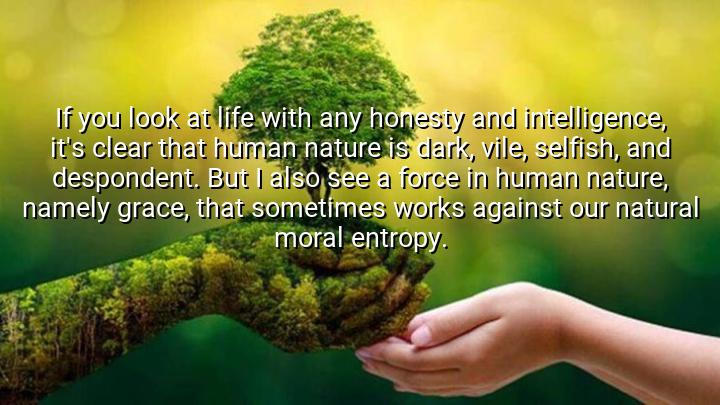




Scott Derrickson’s quote, "If you look at life with any honesty and intelligence, it's clear that human nature is dark, vile, selfish, and despondent. But I also see a force in human nature, namely grace, that sometimes works against our natural moral entropy," reflects a dual perspective on the complexity of human existence. Derrickson acknowledges the darker aspects of human nature, such as selfishness and despair, but he also sees a redeeming force, grace, that counteracts this natural decline toward moral entropy—the idea that, without intervention, human beings tend toward decay or disorder in their moral lives.
The reference to grace suggests that there is something beyond our inherent flaws that can guide people toward goodness, compassion, and redemption. Derrickson views grace as a counterbalance to the negative aspects of human nature. Rather than seeing grace as something mystical or supernatural, it could also be interpreted as moments of human kindness, mercy, and the capacity for selflessness, which stand in opposition to the darker forces that drive individuals toward self-interest and despair.
Derrickson’s recognition of moral entropy implies a pessimistic view of human behavior, suggesting that unless there is some external force—like grace—human beings may naturally devolve toward more self-centered and destructive tendencies. This reflects a worldview that recognizes the struggle between the inherent flaws in human nature and the potential for positive change, highlighting the tension between our darker instincts and the possibility of redemption or growth.
The origin of the quote comes from Scott Derrickson, a filmmaker and screenwriter known for directing films such as Sinister and Doctor Strange. Derrickson’s work often deals with themes of good versus evil, the supernatural, and the complexity of human morality. This quote encapsulates his philosophical view on human nature, emphasizing both the darker aspects of humanity and the possibility of transcendence through grace and moral evolution.

AAdministratorAdministrator
Welcome, honored guests. Please leave a comment, we will respond soon