

If you judge everything by how photographically real it looks, then you're missing out on a lot of what art is about and what communication is. There are ambiguities in life, and that should be reflected in art, cinema, and storytelling, I think.
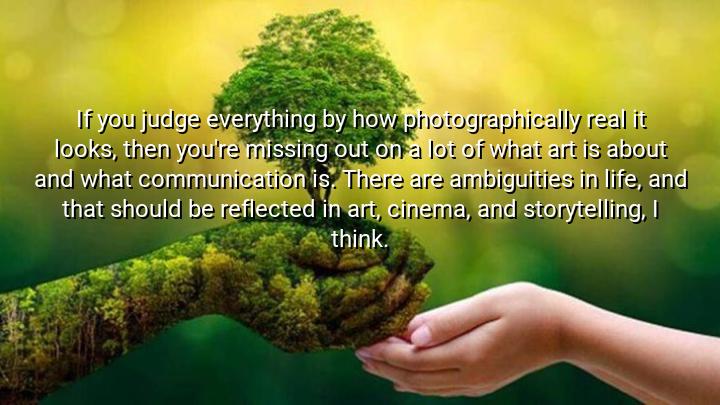




Ben Wheatley’s quote reflects his belief that art and communication are about more than just creating something that looks photographically real. He argues that if we judge art solely based on its realism or its ability to mirror reality exactly, we miss out on the deeper, more complex elements of creativity. Wheatley emphasizes that ambiguities—the uncertainties and nuances of life—are integral to art, and these should be expressed through mediums like art, cinema, and storytelling. In his view, art should not just be about replicating what is immediately visible but should instead capture the mystery, subjectivity, and emotional depth of human experience.
The origin of this quote comes from Wheatley’s work as a filmmaker and storyteller known for his unique and often unconventional approach to cinema. As a director of films such as High-Rise and Kill List, Wheatley often incorporates surrealism, dark humor, and unconventional narratives in his work. His statement reflects a broader philosophy about art and its role in capturing more than just surface-level realities. For Wheatley, film and storytelling are tools for exploring the complexity of life, with its uncertainties and contradictions.
Wheatley’s comment highlights that life itself is full of ambiguity and incompleteness, and these elements should be embraced in art. Instead of focusing on creating something that is perfectly realistic, he advocates for the expression of emotions, ideas, and perspectives that cannot always be captured by literal representations. This perspective challenges the conventional idea that art should primarily depict the world as it is, encouraging a deeper, more reflective engagement with the world through creative expression.
Ultimately, Wheatley’s quote underscores the importance of embracing the unpredictability and ambiguity of life in art. Whether through cinema or other forms of storytelling, he believes that art’s true power lies in its ability to reflect the complexity of human experience, which is often best captured through non-literal, imaginative, and evocative forms. This approach invites both artists and audiences to move beyond realism and engage with the deeper layers of meaning and emotion that define the human condition.

AAdministratorAdministrator
Welcome, honored guests. Please leave a comment, we will respond soon