

If you have to design something, choose things that we need as opposed to frivolous things that we might just want for a month or two for bragging rights.
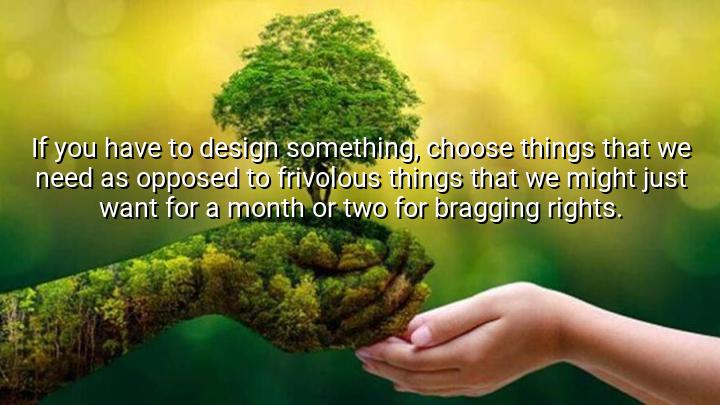




The quote by Saul Griffith—“If you have to design something, choose things that we need as opposed to frivolous things that we might just want for a month or two for bragging rights.”—reflects his philosophy of purpose-driven design. Griffith emphasizes that true design should focus on solving real problems and creating products or systems that provide lasting value, rather than catering to temporary desires or consumerist trends. His words critique the culture of short-term consumption, where many innovations are created more for novelty or prestige than for genuine human need.
The meaning of the quote lies in its call for responsibility and sustainability in the design process. Griffith highlights the distinction between needs—things essential for human well-being, such as clean energy, water, healthcare, and infrastructure—and wants, which often serve as fleeting symbols of status. By prioritizing design that addresses fundamental challenges, he argues that designers and engineers can contribute to solving global problems rather than feeding into wasteful cycles of overproduction and bragging rights consumerism.
The origin of this perspective comes from Griffith’s career as an inventor, engineer, and advocate for sustainable technology. Known for his work in renewable energy and innovative design approaches, he has often spoken about the need to rethink how we innovate in order to tackle issues like climate change and resource scarcity. This quote reflects his broader vision that design should not just serve the marketplace but should actively contribute to building a better future. His practical experience in both technological development and environmental advocacy grounds this philosophy in real-world urgency.
In a broader sense, Griffith’s words challenge both designers and consumers to rethink the value of innovation. Rather than celebrating products that are flashy but disposable, he urges us to measure design by its ability to meet long-term human needs and improve quality of life. His insight resonates strongly in today’s discussions about sustainable design, green technology, and ethical innovation, reminding us that the highest purpose of design is not luxury or prestige but necessity and impact.
Would you like me to also connect this to how Griffith’s ideas align with the concept of design for sustainability and the circular economy?

AAdministratorAdministrator
Welcome, honored guests. Please leave a comment, we will respond soon