

If you continually diet, you are putting your body in a quasi-famine situation. It slows your metabolism down and breaks the thermostat. Diets don't work. They don't help you understand why you're eating more than your body wanted in the first place.
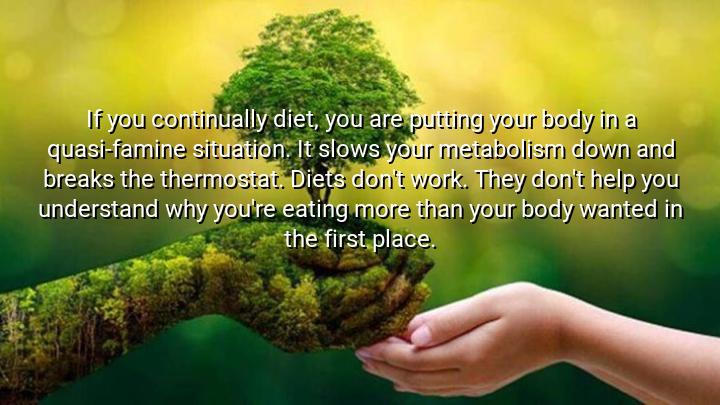




In this quote, Susie Orbach, a renowned psychotherapist and author, critiques the idea of continually dieting and its negative effects on the body. She explains that by constantly restricting food intake, individuals put their bodies into a quasi-famine situation, which can slow down the metabolism. Orbach suggests that this repeated cycle of dieting essentially “breaks the thermostat,” referring to the body’s natural ability to regulate weight and hunger. This metaphor highlights how dieting disrupts the body’s natural systems, making it harder to maintain a healthy weight.
Orbach further asserts that diets don’t work because they don’t address the underlying emotional or psychological reasons behind overeating. She argues that diets only focus on the symptoms of weight gain (e.g., food restriction) without exploring the deeper reasons why someone might be eating more than their body actually needs. In her view, diets fail to help people understand their relationship with food and the emotional triggers that influence eating habits, leading to temporary results rather than lasting change.
The origin of this quote stems from Orbach’s expertise in psychotherapy and her work with people struggling with body image and eating disorders. She has long been an advocate for addressing the psychological aspects of eating rather than focusing solely on physical appearance or calorie restriction. This quote reflects her belief in the importance of exploring the psychological factors that contribute to overeating and unhealthy dieting practices.
Ultimately, Orbach’s words emphasize the importance of understanding the emotional and psychological reasons behind eating habits. Instead of focusing on restrictive diets, she advocates for a more holistic approach to health, where individuals learn to listen to their bodies and cultivate a healthier relationship with food. Her critique of dieting serves as a call for deeper self-awareness and sustainable, mindful eating practices.

AAdministratorAdministrator
Welcome, honored guests. Please leave a comment, we will respond soon