

If what is communicated is false, it can hardly be called communication.
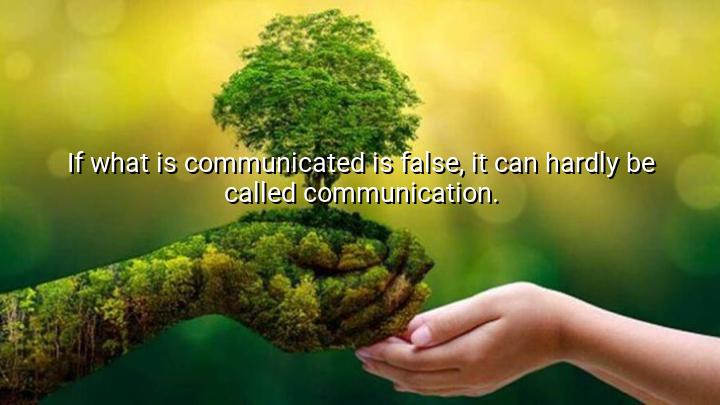




The quote by Benjamin E. Mays — “If what is communicated is false, it can hardly be called communication.” — presents a powerful reflection on the essence of truth in communication. Mays argues that authenticity and honesty are not just desirable in exchanges between people—they are foundational. If the content of a message is false, it undermines the very purpose of communication, which is to share knowledge, build trust, and facilitate understanding.
The origin of this quote lies in Mays’s broader legacy as a minister, educator, and civil rights advocate, particularly known for his mentorship of leaders like Martin Luther King Jr. His work emphasized the moral responsibility that comes with speech and leadership. In this context, the quote serves as an ethical reminder that misinformation, deception, or half-truths corrupt the communicative process and damage relationships, institutions, and even societies.
By stating that falsehood disqualifies something as true communication, Mays elevates truthfulness from a personal virtue to a defining criterion of meaningful dialogue. This idea is especially relevant in today’s world, where media, social networks, and public discourse are often plagued by disinformation. Mays reminds us that without integrity, communication becomes manipulation or propaganda—tools that divide rather than connect.
Ultimately, this quote is a call to responsible speech. Mays challenges individuals—especially those in positions of influence—to consider not just whether they are being heard, but whether they are telling the truth. Only through truthful communication can we foster real understanding, mutual respect, and lasting progress.

AAdministratorAdministrator
Welcome, honored guests. Please leave a comment, we will respond soon