

If we knew what it was we were doing, it would not be called research, would it?
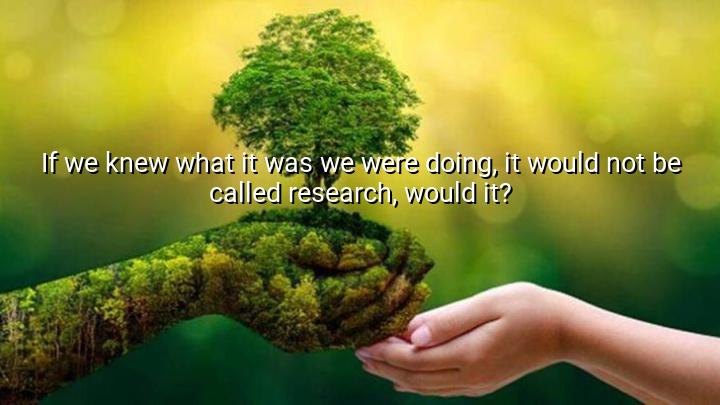




The quote by Albert Einstein emphasizes the inherent uncertainty and exploration in the process of research. By stating, “If we knew what it was we were doing, it would not be called research, would it?,” Einstein highlights that true research involves venturing into the unknown, experimenting, and discovering insights that cannot be fully predicted in advance. The essence of research lies in curiosity, inquiry, and the willingness to navigate uncertainty.
Einstein underscores the importance of accepting ambiguity in scientific and intellectual endeavors. The quote suggests that the value of research comes from the process of exploration rather than having a guaranteed outcome. By acknowledging that researchers often learn as they go, Einstein emphasizes that mistakes, surprises, and unexpected results are integral to advancing knowledge and understanding.
Albert Einstein, the renowned 20th-century physicist, transformed modern science through his work in relativity and theoretical physics. This quote reflects his recognition that scientific discovery is a journey into uncharted territory, where even the most brilliant minds cannot predict all results. It captures his appreciation for creativity, experimentation, and intellectual courage in the pursuit of knowledge.
Ultimately, the quote encourages a mindset of curiosity and openness. Einstein reminds us that research—and, by extension, innovation—requires embracing uncertainty, taking risks, and learning through the process, rather than expecting immediate clarity or predetermined answers. True progress often emerges from exploration and discovery, even when the path is not fully understood.

AAdministratorAdministrator
Welcome, honored guests. Please leave a comment, we will respond soon