

If we as a society are willing to have a preference for organic food, the farmer can pass on the savings.
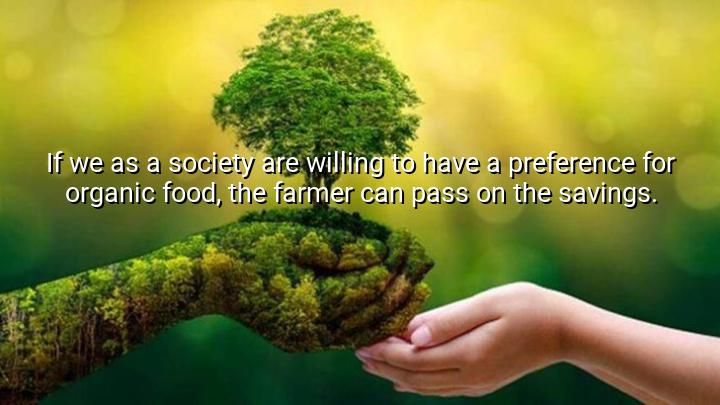




This quote by Robert Patterson highlights the economic and social dynamics involved in the organic food movement. The central message is that consumer preference has the power to influence the agricultural economy. By choosing organic food, consumers create demand that allows farmers to scale their practices, potentially reducing costs and passing those savings on to buyers. It’s a statement about the collective power of society to shape markets through its values and choices.
The phrase “willing to have a preference” emphasizes the importance of intentional consumption. Organic food is often seen as more expensive, but Patterson implies that this can change when enough people support it. A broad-based preference shifts organic farming from a niche to a mainstream practice, which improves efficiency, reduces waste, and ultimately makes it more affordable. It’s a vision of sustainable food systems made possible through public participation.
Robert Patterson’s advocacy reflects a wider discussion around sustainability, agriculture reform, and food ethics. While not as widely quoted as some figures in the organic movement, his message resonates with the push for local, chemical-free, and ecologically responsible food sources. His quote aligns with the idea that change begins with consumer behavior, and that farmers, in turn, respond to this by adapting their production methods.
In essence, Patterson's quote is a reminder that the relationship between farmer and consumer is mutual. The more we support organic practices, the more we enable a system where those practices are economically viable. It's a call to recognize that every purchase is a vote for the kind of food system—and environment—we want to sustain.

AAdministratorAdministrator
Welcome, honored guests. Please leave a comment, we will respond soon