

If someone has children, the first thing they want is for them to be happy, and then become someone in life and all that. But the educational system, I mean always, not just now, creates competitive, successful people, and does not educate them to be happy. The problem is that success gives money, not happiness. The eternal problem.
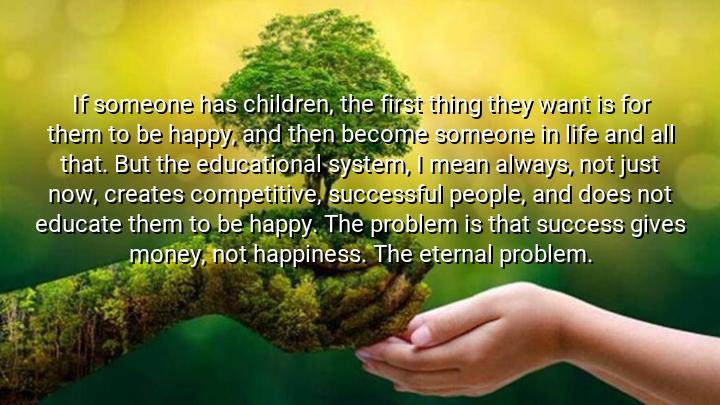




The quote by Jorge Bucay, "If someone has children, the first thing they want is for them to be happy, and then become someone in life and all that. But the educational system, I mean always, not just now, creates competitive, successful people, and does not educate them to be happy. The problem is that success gives money, not happiness. The eternal problem," highlights the tension between the values parents wish to instill in their children and the emphasis placed by society and the educational system on external markers of success. Bucay suggests that while parents prioritize their children’s happiness, the education system often fosters a mindset focused on competition and achievement rather than emotional well-being.
Bucay critiques the way the educational system is designed to produce successful individuals, primarily measured by academic achievement, career status, and financial success. However, this focus on success—especially when tied to monetary gain—can often come at the expense of teaching children how to cultivate happiness. The quote implies that happiness is an inner state that does not necessarily correlate with external accomplishments like wealth or status, yet the system rewards achievements that often fail to nurture emotional fulfillment.
The distinction between success and happiness is central to Bucay’s argument. While success may bring financial security and social recognition, it does not guarantee personal happiness. This points to an ongoing societal issue where people are conditioned to chase external markers of success without being taught how to seek internal joy, contentment, and emotional well-being. Bucay’s words encourage a reflection on the true values we prioritize in education and society.
Ultimately, Bucay’s quote raises an important question about the values instilled in future generations. He challenges the current paradigm, urging a shift toward an educational approach that focuses not just on creating competitive and successful individuals, but also on nurturing their happiness. The quote serves as a reminder that true fulfillment comes not from money or status, but from an understanding of what makes life meaningful and emotionally enriching.

AAdministratorAdministrator
Welcome, honored guests. Please leave a comment, we will respond soon