

If only media people would stop reaching for the low-hanging fruit, which is cynicism and pessimism, and stopped trying so hard to be hip and cool and have a swagger.
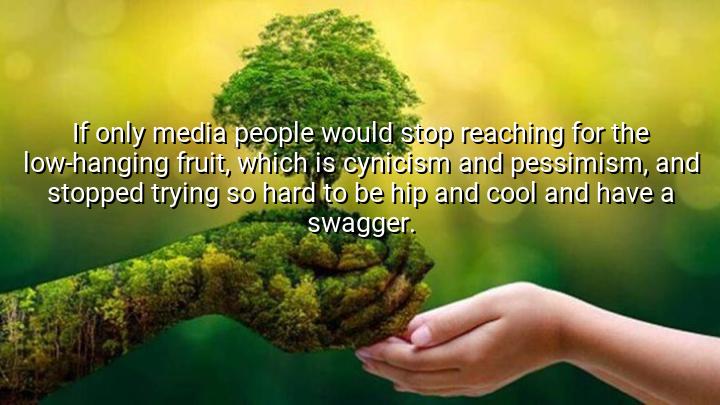




In this quote, Emilio Estevez, an actor and filmmaker, criticizes the media for relying too heavily on cynicism and pessimism to engage audiences. He suggests that the media often takes the easy route, opting for negative or skeptical perspectives because they resonate more quickly with viewers. Estevez advocates for a more thoughtful approach, urging the media to move beyond the “low-hanging fruit” of negativity and to offer content that is more positive and nuanced.
Estevez also points out the tendency for media personalities and outlets to prioritize being hip and cool, or adopting a sense of swagger to appear edgy and relevant. This desire to seem trendy or authoritative can lead to a focus on style over substance, making it harder to foster genuine, insightful discussions. Estevez is calling for a shift in how the media approaches its role in society, encouraging a move away from superficial portrayals of coolness and towards more responsible, meaningful content.
The reference to "low-hanging fruit" suggests that easy targets like cynicism and pessimism are often seen as shortcuts to attracting attention, as they cater to the more immediate, often negative reactions of the audience. Estevez is challenging the idea that negativity is the most effective tool for connecting with the public, instead advocating for a more thoughtful and balanced approach to storytelling and commentary.
Ultimately, Estevez’s quote is a critique of the media's tendency to prioritize sensationalism over substance. By urging media professionals to stop seeking easy ways to appeal to the audience, he calls for a more responsible, thoughtful approach that encourages genuine reflection and positivity in a world often dominated by negative narratives.

AAdministratorAdministrator
Welcome, honored guests. Please leave a comment, we will respond soon