

If one of the arguments against eating meat is to do with cruelty and animal intelligence, then lab meat avoids that. There's also the environmental argument for it.
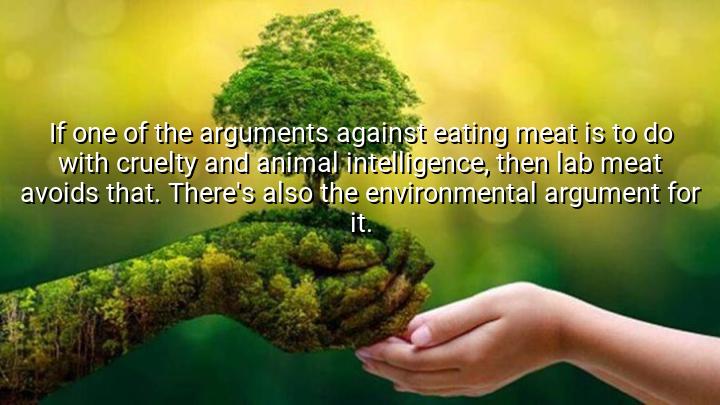




In the quote, "If one of the arguments against eating meat is to do with cruelty and animal intelligence, then lab meat avoids that. There's also the environmental argument for it," Margaret Atwood addresses two common reasons people oppose traditional meat consumption: concerns about the ethical treatment of animals and the environmental impact of livestock farming. She suggests that lab-grown meat could provide a solution by eliminating the need for raising and slaughtering animals, thereby addressing the cruelty issue while also offering an alternative that is potentially more sustainable.
Atwood highlights that lab meat, produced without harming animals, directly confronts the ethical argument of animal intelligence and suffering. By producing meat in a controlled lab environment, this technology allows for the creation of animal protein without the need to raise animals for consumption, thus alleviating concerns about animal cruelty. Additionally, lab-grown meat is often promoted as a more environmentally friendly option, as it potentially reduces the resources and greenhouse gases associated with traditional meat production.
The origin of this quote is rooted in Atwood’s recognition of the increasing ethical and environmental concerns related to meat consumption. As an author known for her thought-provoking works, including "The Handmaid's Tale", Atwood often tackles complex issues around human behavior, technology, and the natural world. Her statement reflects the growing discussion around sustainable and ethical alternatives to traditional meat production.
Ultimately, Atwood’s quote explores how lab-grown meat could serve as a solution to some of the most pressing issues associated with meat consumption, such as animal cruelty and environmental damage. It highlights the potential of emerging technologies to offer more ethical and sustainable ways to meet the demand for animal products while addressing societal concerns.

AAdministratorAdministrator
Welcome, honored guests. Please leave a comment, we will respond soon