

If I don't need the money, I don't work. I'm going to spend time with my family and friends, and I'm going to travel and read and listen to music and try to learn a little bit more about how to be a human being, as opposed to learning how to be somebody else.
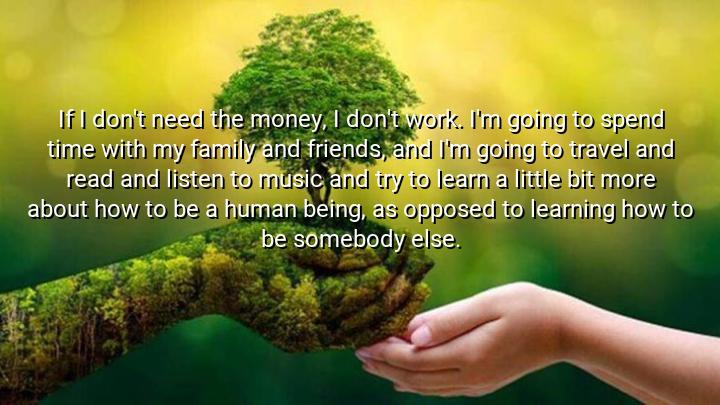




The quote by James Spader emphasizes the importance of personal fulfillment and self-discovery over material or societal expectations. By stating, "If I don't need the money, I don't work. I'm going to spend time with my family and friends, and I'm going to travel and read and listen to music," Spader highlights his focus on activities that enrich the mind, soul, and human experience rather than pursuing work solely for financial gain.
The meaning of this quote centers on the distinction between living authentically and conforming to external pressures. Spader emphasizes that true growth comes from exploring the world, engaging in meaningful relationships, and cultivating personal interests. His approach encourages learning how to be a thoughtful and empathetic human being, rather than imitating others or chasing societal definitions of success.
In terms of origin, this quote comes from James Spader, an American actor known for his roles in film and television, as well as his thoughtful reflections on life and work. Spader’s statement reflects a philosophy of balancing professional obligations with personal development and prioritizing experiences that contribute to deeper self-awareness and emotional intelligence.
Ultimately, the quote underscores that life is about self-exploration and personal growth. Spader encourages focusing on meaningful activities—such as spending time with family, traveling, reading, and listening to music—as a way to nurture the mind and spirit. It is a reminder to cultivate one’s own identity and human experience rather than being consumed by external pressures or imitation of others.

AAdministratorAdministrator
Welcome, honored guests. Please leave a comment, we will respond soon