

If anyone should do any pardoning. I should be the one pardoning the government for what they did to the Japanese-American people.
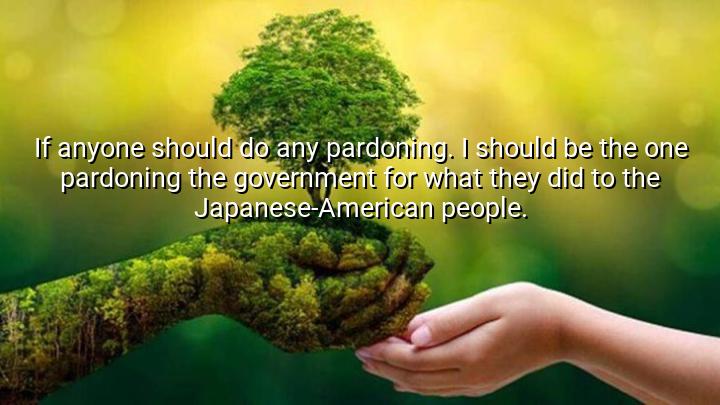




In this quote, Fred Korematsu, a civil rights activist, is reflecting on the unjust treatment of Japanese-American people during World War II. Korematsu was one of the most prominent figures who resisted the internment of Japanese Americans in camps by the U.S. government after the attack on Pearl Harbor. He argues that if pardoning is necessary, it should be directed at the government, not the people who were harmed by its actions. Korematsu feels that the government, rather than the victims of its policies, should be held accountable for the wrongs it committed against innocent Japanese-Americans.
Korematsu’s statement challenges the idea of forgiveness or pardoning in the context of an official apology. Rather than asking for personal forgiveness, he believes the government should acknowledge its role in the injustices committed and recognize the harm it caused to the Japanese-American community. His quote reflects his belief that the government should take responsibility for its actions during the war, when internment camps violated basic civil liberties and discriminated against an entire group based solely on their ethnicity.
The quote also speaks to Korematsu’s own experience as someone who was wrongfully detained and forced into internment. Despite being convicted of defying the internment orders, his case later became a landmark in the fight for justice and civil rights. Korematsu’s activism highlighted the broader issues of racial discrimination and government overreach, and his fight for justice continued even after his case was initially dismissed by the courts.
Ultimately, Korematsu’s quote highlights his frustration with the lack of accountability for the government’s actions during the war. His stance emphasizes the importance of truth and justice, and the need for the government to take responsibility for its past mistakes rather than simply offering symbolic gestures of forgiveness. It calls for an acknowledgment of the profound impact that these government policies had on the lives of innocent citizens, many of whom still bear the scars of that historical wrong.

AAdministratorAdministrator
Welcome, honored guests. Please leave a comment, we will respond soon