

If a person is treated like a patient, they are apt to act like one.
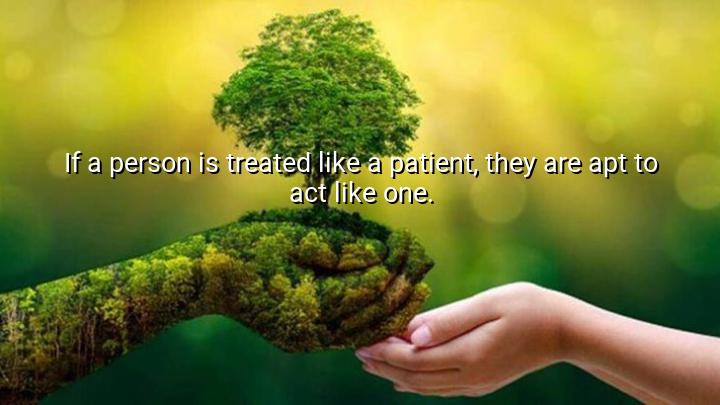




Frances Farmer’s quote, “If a person is treated like a patient, they are apt to act like one,” reflects the idea that how individuals are perceived and treated can significantly influence their behavior and identity. In this case, Farmer suggests that when someone is consistently viewed or treated as a patient—someone who is sick or in need of care—they may internalize this role and adopt behaviors associated with that identity. The quote highlights the power of societal expectations and labels, and how they can shape a person's actions and self-perception.
The origin of this quote can be traced to Farmer’s personal experiences and her struggles with mental health and institutionalization. As an actress and public figure, she faced significant stigma and misunderstanding about her mental health issues, which led to her being treated more as a case than as a person. This statement reflects her frustration with the dehumanizing effects of being placed in a category like "patient," rather than being seen as an individual with her own agency. Farmer's experience in psychiatric institutions may have influenced her belief that such labels can have a profound effect on a person’s sense of self.
Farmer’s quote also speaks to a broader psychological truth about identity and the role of external influences in shaping human behavior. If someone is constantly treated with pity or viewed as a patient, they may come to see themselves as helpless or passive. This could lead to a self-fulfilling prophecy, where the person becomes more dependent or withdrawn because that’s how they have been conditioned to behave. It suggests that the way we approach and label others can either empower or disempower them, depending on the treatment they receive.
Ultimately, the quote serves as a critique of the way society tends to view and treat those facing illness, particularly mental health issues. Farmer is urging us to consider the impact of how we label and treat people, emphasizing that it’s essential to treat individuals with dignity and respect rather than reducing them to their condition. By acknowledging the humanity of others, we can help them retain a sense of agency and avoid reinforcing negative stereotypes or limiting behaviors.

AAdministratorAdministrator
Welcome, honored guests. Please leave a comment, we will respond soon