

If a man does not keep pace with his companions, perhaps it is because he hears a different drummer. Let him step to the music which he hears, however measured or far away.
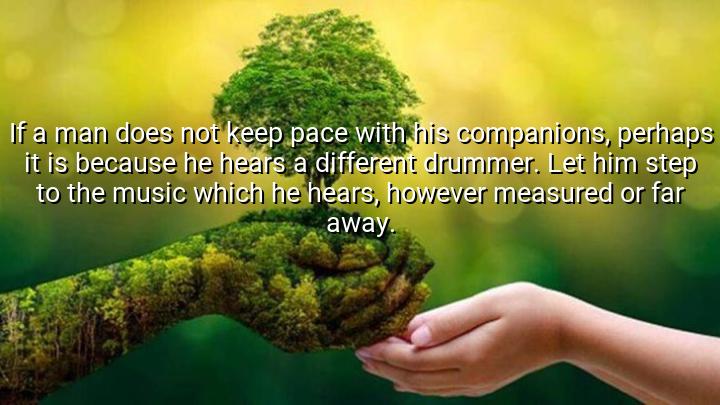




Henry David Thoreau’s quote, "If a man does not keep pace with his companions, perhaps it is because he hears a different drummer. Let him step to the music which he hears, however measured or far away," reflects Thoreau's belief in the value of individuality and the importance of following one's own path, regardless of societal expectations. Thoreau suggests that people who choose to go at their own pace or in a different direction might be doing so because they are listening to their own unique inner rhythm—represented by the "different drummer." This implies that personal growth and success come from being true to oneself, even if it means diverging from the crowd.
The imagery of the "different drummer" symbolizes the unique calling or internal compass that guides a person, encouraging them to pursue what resonates with them individually, rather than conforming to the expectations of others. Thoreau encourages those who may seem out of step with their peers to embrace their uniqueness, rather than trying to keep pace with conventional norms. The music in the quote represents a metaphor for personal purpose and aspiration, urging people to follow their own path, regardless of how unconventional it may seem.
Thoreau, a proponent of self-reliance and individual freedom, often championed the idea of living according to one's own principles rather than following the crowd. His writings, particularly in Walden, encourage readers to live authentically, making decisions based on their inner convictions rather than external pressures. This quote is a direct reflection of his belief in personal independence and authenticity.
Ultimately, Thoreau’s quote emphasizes the power of personal conviction and the importance of staying true to one's own calling. It encourages individuals to listen to the “music” they hear, even if it seems different from what others are following. The message is clear: individuality and authenticity are valuable, and the courage to follow one’s own path can lead to fulfillment and true self-expression.

AAdministratorAdministrator
Welcome, honored guests. Please leave a comment, we will respond soon