

I was born in 1988, one year before the fall of the Berlin Wall, and people of my generation were taught that utopian dreams are dangerous.
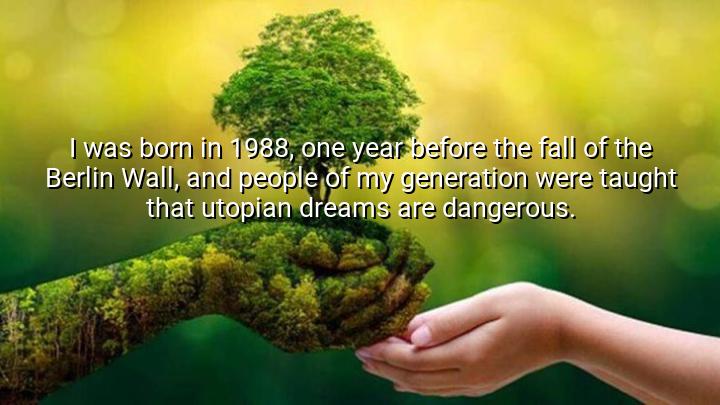




Rutger Bregman’s quote reflects the impact of historical events on the worldview of his generation. Born in 1988, just one year before the fall of the Berlin Wall, Bregman was part of a generation that grew up in the aftermath of the Cold War and the ideological divide between the East and the West. The fall of the Berlin Wall symbolized the end of a long-standing ideological conflict, but for Bregman’s generation, it also marked the shift away from the ideal of a utopia, which had previously been seen as a possible, albeit flawed, vision for the future.
Bregman’s statement that his generation was taught that utopian dreams are dangerous reflects a post-Cold War skepticism about idealism. During the Cold War, visions of a perfect society often clashed with political ideologies, leading to the belief that attempts to create a utopia could lead to undesirable consequences, such as authoritarianism or conflict. As a result, Bregman’s generation grew up with a more pragmatic and cautious view of social change, where idealistic aspirations were often viewed with distrust or as unrealistic.
The origin of this quote comes from Bregman’s reflection on how global history and political changes have shaped the perspectives of those born in the late 20th century. Growing up in the shadow of the Berlin Wall’s fall, Bregman was influenced by the realpolitik mentality that dominated the post-Cold War era, where political and economic systems were often seen as too entrenched for radical transformation.
Ultimately, Bregman’s quote illustrates the tension between idealism and pragmatism that defines his generation’s approach to social and political change. While earlier generations may have held more optimistic views about creating a better world, those born after the Cold War were more likely to approach the idea of utopianism with caution, influenced by the lessons of the past. The quote highlights how historical events shape the collective mindset of each generation.

AAdministratorAdministrator
Welcome, honored guests. Please leave a comment, we will respond soon