

I think the greater responsibility, in terms of morality, is where leadership begins.
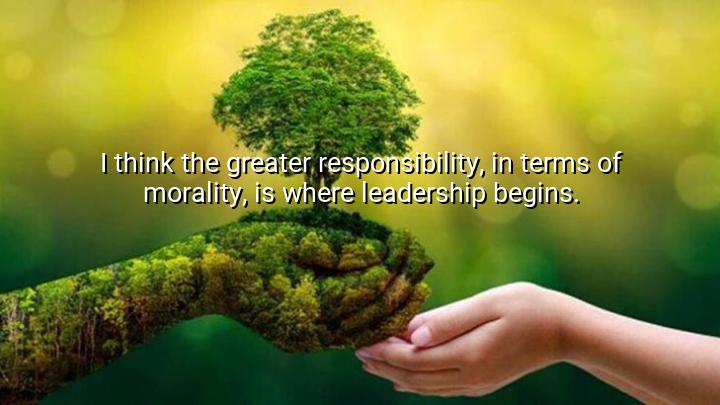




Norman Lear’s quote, “I think the greater responsibility, in terms of morality, is where leadership begins,” emphasizes the idea that true leadership is not merely about authority, power, or control. Instead, it begins with a deep sense of responsibility toward others and the moral choices one makes. Lear suggests that morality—the commitment to fairness, justice, and integrity—is the foundation upon which effective leadership must be built. Without this grounding, leadership risks becoming self-serving or exploitative.
The origin of this perspective is deeply tied to Lear’s life and career. As a renowned television producer, writer, and activist, Lear consistently used storytelling to challenge social norms and highlight issues of ethics, justice, and equality. Shows like All in the Family and The Jeffersons were not only forms of entertainment but also cultural commentaries on race, politics, and morality. Through his work, he demonstrated how leadership in media could influence public discourse and foster greater empathy.
Lear’s words reflect the broader belief that leaders are not defined by their titles but by their moral compass. Whether in politics, business, or the arts, leadership rooted in morality ensures that decisions serve the greater good rather than narrow personal interests. This understanding reframes leadership as a moral duty—an obligation to guide, protect, and uplift others.
In essence, the quote captures a timeless truth: the heart of leadership lies in morality. By recognizing the “greater responsibility” to act with integrity, leaders create environments of trust and progress. Lear’s message reminds us that leadership without morality is hollow, but leadership grounded in responsibility can transform both individuals and societies.

AAdministratorAdministrator
Welcome, honored guests. Please leave a comment, we will respond soon