

I think cinema is closer to allegories than to reality. It's closer to our dreams.
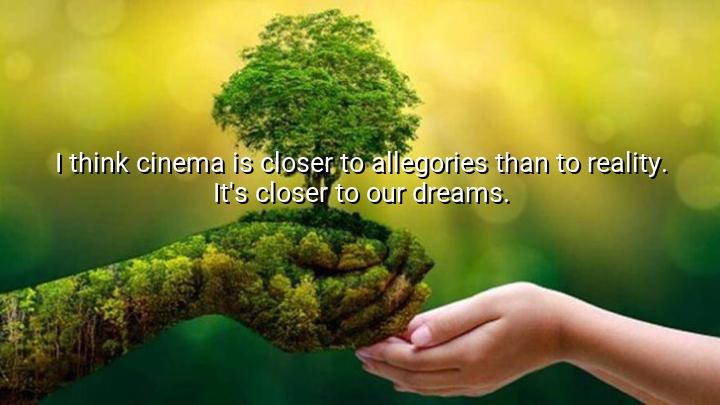




In this quote, Manuel Puig reflects on the nature of cinema, suggesting that it is more akin to allegories than to direct representations of reality. He implies that films often convey symbolic or metaphorical meanings, rather than merely depicting real-life events or experiences. By comparing cinema to allegories, Puig highlights how films often communicate deeper truths or explore complex themes through symbolic imagery, rather than straightforward depictions of the world as it is.
Puig also notes that cinema is "closer to our dreams," suggesting that the emotional and imaginative nature of films aligns more with the surreal, symbolic logic of dreams rather than the rational, everyday experience of life. Just like dreams, films can take audiences into fantastical worlds where reality is distorted, emotions are heightened, and impossible scenarios can unfold. This comparison emphasizes cinema's ability to tap into the subconscious and evoke emotional responses that go beyond mere realism.
The idea of cinema being linked to dreams rather than reality also touches on the escapist quality of films, which offer audiences a temporary departure from the mundane and often present experiences that are more intense or heightened than what one encounters in real life. In this way, cinema serves as a powerful medium for exploring human emotions, desires, and fears, much like dreams do.
Ultimately, Puig’s quote underscores the artistic and emotional aspects of cinema, positioning it as a form of expression that transcends the limitations of reality. It suggests that films are more than just visual representations of life; they are reflections of the imagination, using allegorical storytelling and dream-like sequences to explore the complexities of human experience.

AAdministratorAdministrator
Welcome, honored guests. Please leave a comment, we will respond soon