

I paint and work as a sculptor, and I see architecture as an art... If you follow this approach you can use techniques to the service of man and to the service of an artistic idea, and beauty.
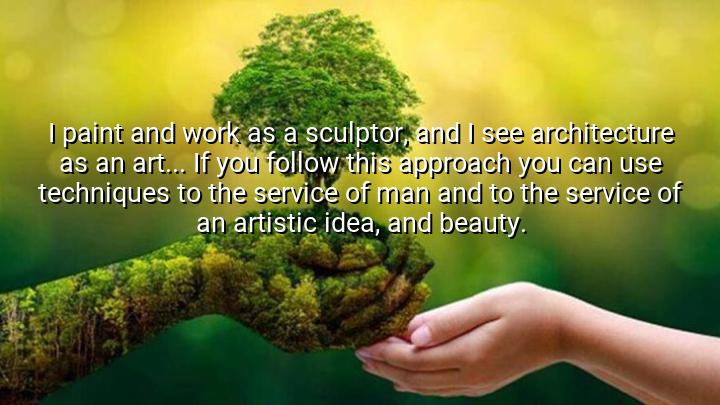




Santiago Calatrava’s quote — “I paint and work as a sculptor, and I see architecture as an art... If you follow this approach you can use techniques to the service of man and to the service of an artistic idea, and beauty.” — reveals his deeply artistic philosophy toward architectural practice. Rather than viewing architecture as merely a technical or engineering discipline, Calatrava aligns it with painting and sculpture, placing it within the broader tradition of the fine arts. His background in multiple creative fields shapes a unique approach where form, expression, and human experience are prioritized.
The quote highlights Calatrava’s belief in the integration of disciplines — a method where artistic vision and structural technique are inseparable. By emphasizing that techniques should be used “in the service of man and an artistic idea,” he suggests that technology and engineering should not dominate or dictate architecture, but rather support the creation of beauty and human-centered design. This approach is evident in his signature works, which often feature organic shapes, flowing lines, and kinetic elements reminiscent of both natural forms and classical sculpture.
Calatrava’s identity as a sculptor and painter influences how he conceives buildings — not simply as static enclosures but as artistic compositions that evoke emotion and meaning. His architectural designs, such as the City of Arts and Sciences in Valencia or the Milwaukee Art Museum, embody this principle, functioning simultaneously as functional structures and sculptural masterpieces. They are not just shelters, but experiences, engaging the viewer in both practical and aesthetic ways.
In essence, the quote reflects Calatrava’s vision of architecture as a poetic discipline, one that speaks to the soul as much as it serves the body. It’s a call to elevate architecture from utility to art, reminding designers and builders that their work carries the potential to enrich lives through creative inspiration, technical mastery, and above all, beauty.

AAdministratorAdministrator
Welcome, honored guests. Please leave a comment, we will respond soon